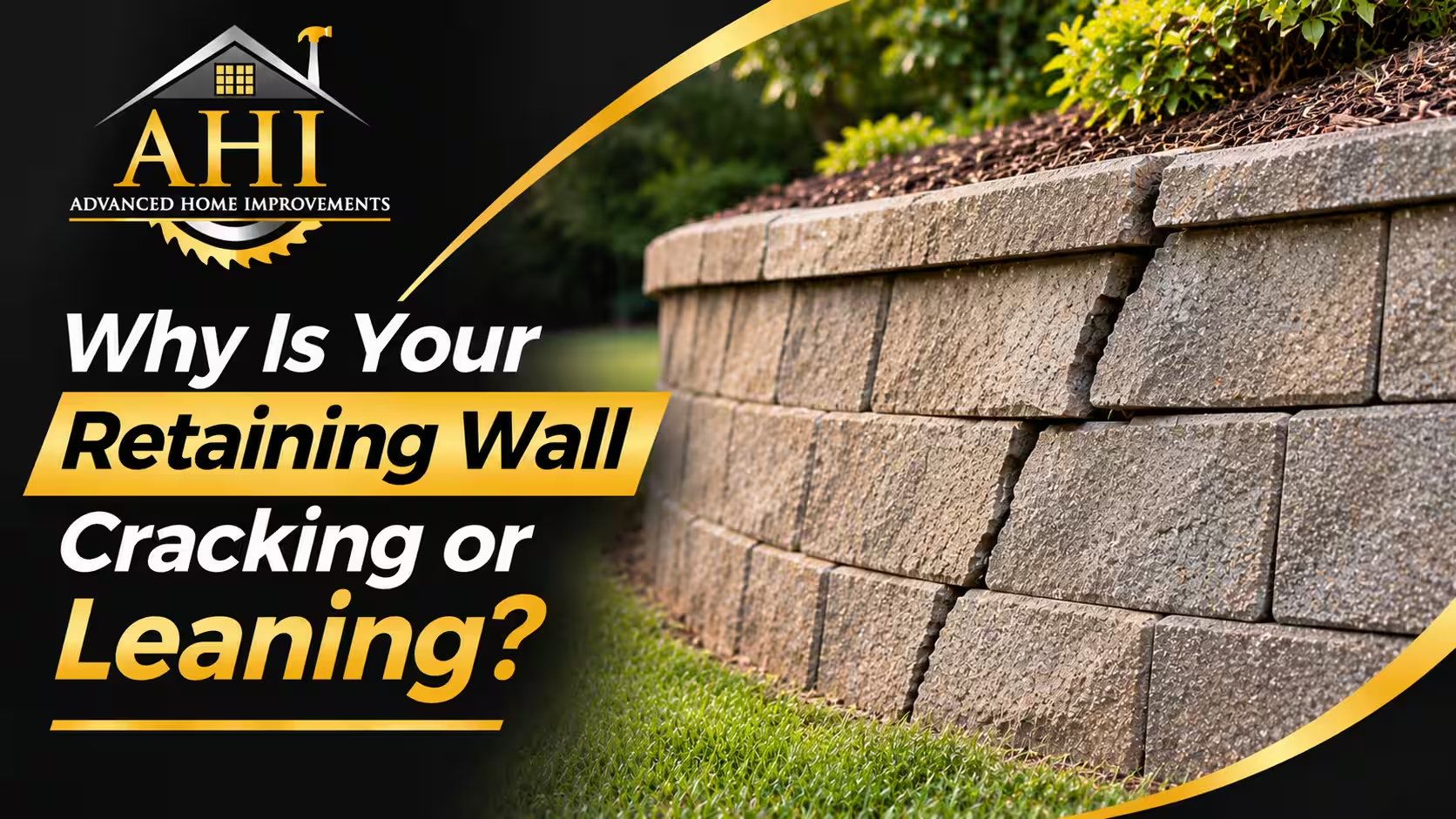
A retaining wall holds soil in place while resisting water, ground movement, and nearby weight. Cracks, bulging, or a growing lean can signal that those forces are no longer being managed well. Damage may look minor at first, yet movement can worsen if the cause remains.
The visible crack is only part of the problem. Drainage, footing, backfill, slope, and nearby loads all affect stability. Understanding the damage pattern helps determine whether a targeted repair is reasonable or if the wall needs structural review.
What Is Putting Pressure on Your Retaining Wall?
Retaining walls resist lateral earth pressure, which is the sideways force soil places against a structure. Pressure can increase when soil becomes saturated, the slope rises behind the wall, or weight is added near the top. Driveways, patios, sheds, and landscaping may create surcharge loads not included in the original design.
Water adds weight and may build hydrostatic pressure when it cannot escape. Drainage manages that water rather than simply keeping the wall dry. When drainage fails, pressure can rise and push the wall outward.
Four Common Causes of Retaining Wall Damage
| Cause | Effect |
| Poor drainage | Trapped water raises pressure and washes out soil. |
| Weak footing | Uneven support causes settlement or rotation. |
| Soil movement | Clay, erosion, or loose backfill shifts the wall. |
| Added weight | Nearby vehicles or structures increase loads. |
These causes can overlap. A clogged drain may saturate clay soil, while a weak base makes the wall less able to resist pressure. Patching the crack without correcting the underlying conditions may allow the damage to return.
Read the Warning Signs Before They Worsen
A quick check after rainfall can reveal changing conditions: note whether puddles remain behind the wall, soil stays unusually wet, water exits from new locations, or cracks appear wider. Do not inspect from a position where the wall could fall toward you. Take photos from a safe distance and share them with the inspector.
Crack patterns offer clues but do not confirm the cause. Photograph damage, note when it appeared, and compare alignment over time. Movement after rain, irrigation changes, excavation, or nearby construction is useful information to share during an inspection.
- Horizontal cracks: Pressure or bending stress.
- Vertical cracks: Settlement, shrinkage, or movement between sections.
- Stair-step cracks: Differential movement along mortar joints.
- Bulging or leaning: Loss of alignment or resistance.
- Gaps or soil loss: Erosion or lost support.
Walls that move, separate, or support a driveway or building need prompt evaluation. Keep people away from the affected area and avoid adding weight near the top.
Why Drainage Behind a Retaining Wall Matters
A wall can look solid yet suffer when water collects behind it. Drainage gravel, perforated pipe, filter fabric when specified, and weep holes can direct water away. Their design depends on site conditions; adding a drain without a safe outlet may not solve anything.
Look for water spilling over the wall, clogged outlets, soggy ground, pooling, or soil washing out near the base. These clues do not justify digging behind a leaning wall; excavation may remove support and worsen movement.
A Realistic Example of a Crack That Keeps Returning
Imagine a block wall beside a sloped yard. The owner patches a horizontal crack, but it returns after rain, and the wall appears farther out of line. Repeating the patch treats the symptom, not the pressure or movement behind it.
An inspection would check the outlet, soil moisture, alignment, footing, and added loads. Drainage correction may help, but movement, weak reinforcement, or foundation problems could require structural work.
Retaining Wall Repair vs. Replacement
The decision depends on movement, wall performance, and whether the cause can be corrected. Stable surface cracks differ from bowing, rotation, or separation. A structural or geotechnical professional can evaluate soil, drainage, footing, reinforcement, and loads before specifying repairs.
| Repair may fit | Rebuild may be needed |
| Limited cracks without active movement | Significant lean, bowing, or displacement |
| Drainage can be corrected safely | Failed or unevenly settled base |
| Local damage can be stabilized | Widespread or recurring movement |
| Wall suits its current loads | Design cannot safely handle soil or loads |
Do not try to pull a leaning wall upright with a vehicle, jack, or improvised brace. The wall could shift suddenly, and the repair may not address its foundation or soil conditions.
Retaining Wall Requirements in Chula Vista
Homeowners in Chula Vista should check city requirements before building or replacing a retaining wall. Permit exemption may apply to walls 3 feet or less, measured from footing top to wall top, only if they do not support surcharge or impound flammable liquids. Planning and zoning rules may still apply.
Walls supporting driveways, buildings, or other loads may need review. Confirm current requirements with the city before work starts, especially if drainage, grading, or structural conditions will change.
What Proper Construction Helps Prevent
Wall durability depends on more than block or concrete. A suitable footing, compacted base, drainage, reinforcement, and backfill must work together and suit the slope, soil, water, and loads.
AHI Restoration helps property owners assess retaining wall damage and consider next steps. A review should identify why the wall moved, not simply cover cracks, so the work addresses the conditions affecting stability.
Frequently Asked Questions
What is the most common cause of retaining wall failure?
Water trapped behind the wall is a major contributor because it increases pressure. Poor footing, weak reinforcement, soil movement, and extra loads can also cause cracking or displacement.
Is a leaning retaining wall dangerous?
It can be, particularly when the lean is increasing, the wall is bulging, or blocks are separating. Avoid the area near a visibly unstable wall and arrange a professional assessment.
Can a cracked retaining wall be repaired?
Some cracks can be repaired if the wall is stable and the cause is understood. Active movement, major displacement, or foundation problems may require more extensive structural work or rebuilding.
When should a retaining wall be replaced?
Replacement may be necessary when the wall cannot be stabilized reliably, has significant movement, or is not suited to the soil and loads it must hold. An inspection helps determine the safest option.
Final Thoughts: Responding to Retaining Wall Movement
Cracks, bulging, and leaning are signs worth investigating, especially when they grow or appear alongside drainage problems, settlement, or displaced blocks. The safest next step is to identify the forces affecting the wall and assess its stability before choosing a repair. Cosmetic patching alone may not stop ongoing movement.
AHI Restoration assists property owners with retaining wall damage and the next steps for addressing it. Understanding the wall’s drainage, soil pressure, footing, and condition helps guide repairs that focus on stability rather than just appearance.