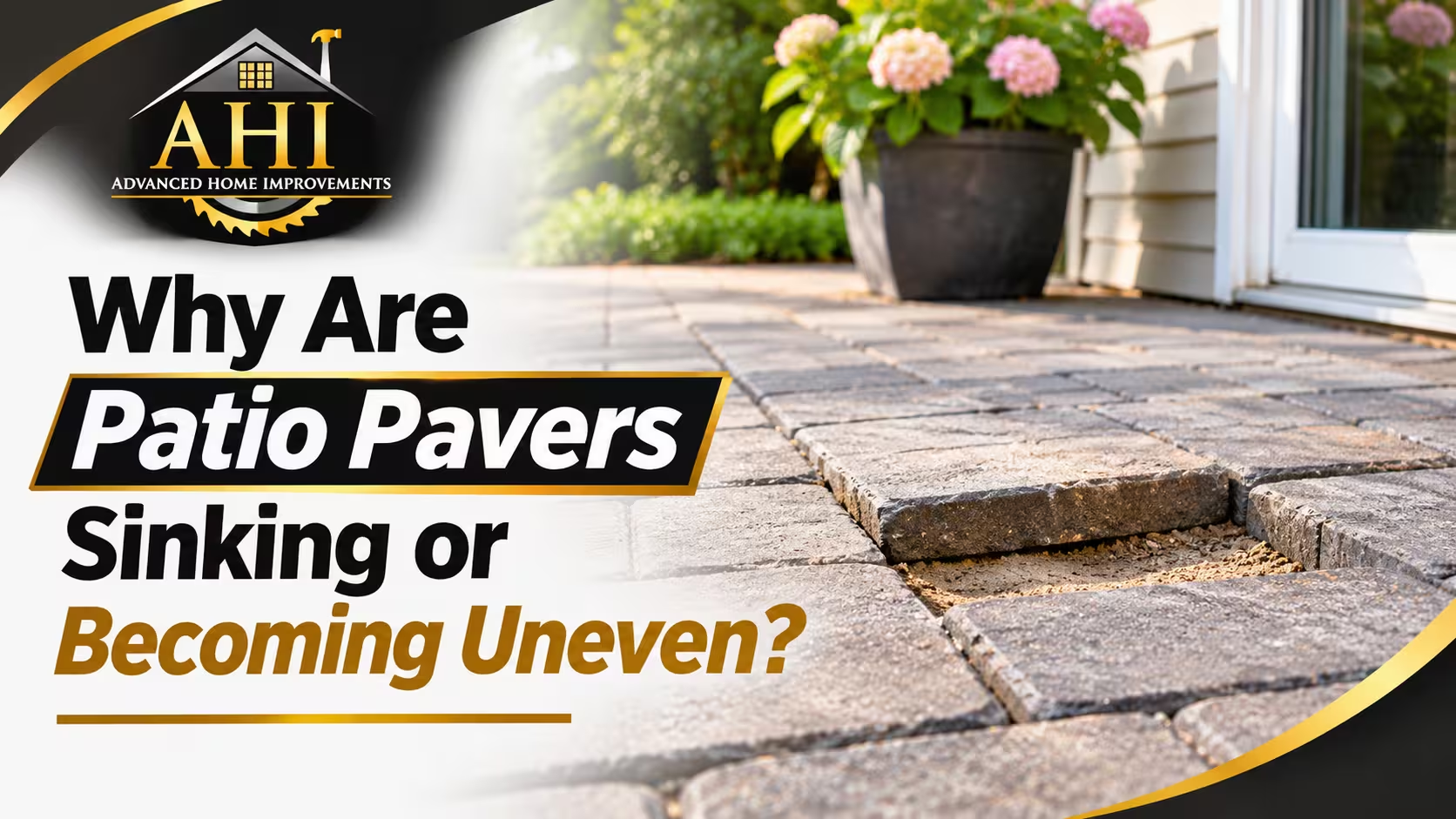
A Chula Vista homeowner notices that several patio pavers have dropped after a stretch of rain. One rocks underfoot, and water collects in a shallow dip near the garden. The family wonders whether the pavers have worn out or something underneath has changed.
Often, the pavers are showing a problem below the surface. Soil may have settled, water may have carried material away, or the original base may not have been compacted properly. Finding the cause helps homeowners choose a lasting repair instead of covering the dip temporarily.
Why Do Patio Pavers Sink or Move Out of Place?
Interlocking pavers depend on stable soil, a compacted aggregate base, bedding sand, and joint material. If one layer loses support, the pavers may settle or spread.
| Possible cause | What homeowners may notice |
| Poor compaction | Broad dips or recurring settlement |
| Water movement | Missing joint sand or washed-out areas |
| Failed edge restraints | Gaps and spreading along the border |
| Roots or ground movement | Localized lifting or uneven rows |
| Heavy loads | Depressions or visible ruts |
Poor Base Preparation Can Lead to Settlement
A patio needs a firm foundation before bedding sand and pavers are installed. If the soil subgrade or crushed-stone base was not compacted in suitable layers, small voids can remain. Foot traffic, furniture, and moisture may gradually compress these weak areas.
The Concrete Masonry & Hardscapes Association (CMHA) recommends at least 98% Standard Proctor density for soil subgrades and aggregate bases in pedestrian areas and residential driveways. Its guidance describes a typical 4-inch minimum compacted base for patios over well-drained soil. Actual depth depends on site conditions.
Poor Drainage and Water Erosion
Water is a common reason for sinking patio pavers. If the surface directs runoff toward the house, holds puddles, or collects water along its edges, moisture may enter the bedding layer and carry fine material away. Leaking irrigation lines and downspouts beside the patio can make the problem worse.
Check the patio after rainfall for:
- Puddles that repeatedly form in the same low spots.
- Joint sand that disappears after watering.
- Soil washed out along the patio edge.
- Soft or hollow-feeling areas beneath pavers.
Repairs may involve correcting the grade, redirecting downspouts, fixing irrigation leaks, or improving drainage. Replacing pavers without controlling the water source often leads to repeat settlement.
Loose Edge Restraints Allow Pavers to Spread
Edge restraints hold the outside rows in place and preserve the interlocking pattern. If a restraint is missing, broken, poorly anchored, or installed over a weak base, pavers may creep outward. As joints open, bedding sand can escape, and nearby units may shift.
This often appears along an exposed border or garden bed. Repair means restoring support and securing the restraint; joint sand alone will not hold a failing edge.
Roots, Ground Movement, and Heavy Loads
Tree roots can push pavers upward, while soil movement or erosion can leave gaps beneath them. Look for nearby trees, changing soil levels, or movement after wet weather.
Pavers may also settle when the base was not designed for the weight placed on it. A patio built for people and furniture may not support vehicles, heavy planters, or equipment. Repeated loading can compress weak support and create ruts.
Can You Fix Sinking Patio Pavers Without Replacing the Whole Patio?
Often, yes. If the problem is limited and the pavers remain in good condition, a contractor may lift the affected units, correct the base, restore the bedding layer, and reinstall the same pavers. This process is called lifting and relaying.
Adding loose sand over the surface is not a reliable fix. It may briefly reduce a height difference, but it does not rebuild a failed base or stop water from washing material away. An inspection from AHI Restoration can help homeowners understand what repair work their patio may need.
When Is Paver Repair Enough, and When Is Replacement Better?
A localized dip, a few loose units, or one failed edge restraint may be repairable without disturbing the entire patio. Broader settlement, repeated washouts, widespread movement, or badly damaged pavers may point to a larger base or drainage problem.
Before choosing a repair, check:
- How far settlement extends around the visible dip.
- Whether water enters from a slope, downspout, or irrigation line.
- Whether the edge restraints remain secure.
- Whether the pavers can be lifted and reused.
In Chula Vista, the right solution depends on grading, soil, drainage, and patio use.
How to Reduce the Risk of Future Paver Settlement
Keep drainage paths clear, repair irrigation leaks, and address standing water early. Refill open joints when needed, but do not mistake missing sand for the only possible cause.
During installation or major repairs, the base should be built and compacted for the soil and expected use. CMHA guidance describes compacting aggregate in lifts, often 4 to 6 inches thick, with suitable equipment. Secure edge restraints and proper grading also help reduce movement.
Frequently Asked Questions
Why are my patio pavers sinking in one spot?
A localized dip may result from poor compaction, a leaking irrigation line, soil erosion, or a void beneath the base. The affected pavers usually need to be lifted so the support underneath can be inspected.
Does rain cause patio pavers to become uneven?
Rain alone does not usually make a properly built patio sink. However, water that pools or washes away bedding and base material can cause settlement.
Can I fix uneven pavers by adding sand?
Adding sand on top rarely solves the underlying issue. The affected pavers generally need to be lifted, the base corrected, and the units reinstalled.
How do I know if my paver base is failing?
Recurring dips, loose pavers, washed-out material, and settlement across several areas may indicate base failure. An inspection can reveal how deep the problem extends.
Should I repair or replace a sunken paver patio?
Small areas are often repairable when the pavers remain sound, and the cause can be corrected. Widespread settlement, drainage failure, or damaged units may require more extensive rebuilding.
Final Thoughts: Fix the Support Beneath the Pavers
Uneven pavers often signal that something below the surface needs attention. Identifying the cause helps prevent repeat repairs, protects the surrounding hardscape, and keeps the patio safer to use. A lasting solution addresses the base, drainage, or edge support rather than hiding the uneven surface.
For persistent sinking patio pavers in Chula Vista, AHI Restoration can assess the affected area and help determine whether the problem involves base failure, drainage issues, or shifting ground. The right repair focuses on restoring a stable, even patio surface.