A good hardscape project starts with the yard, not the material catalog. Patios, walkways, and retaining walls all need the right layout, base, slope, and drainage. AHI Restoration helps homeowners plan those details before construction starts.
This matters because a nice-looking patio can still cause problems if water drains the wrong way. A walkway can feel awkward if it is too narrow. A retaining wall can also need more than decorative blocks. This guide explains what to plan, which materials may fit, and how to compare contractors before you request an estimate.
What Does a Hardscaping Contractor Do?
A hardscaping contractor builds the solid parts of an outdoor space. These often include patios, walkways, retaining walls, steps, seating areas, concrete surfaces, and other built features. Professional hardscaping services can bring these elements together while accounting for grading, drainage, materials, and the existing yard layout.
Soft landscaping covers the living parts of the yard, such as grass, plants, shrubs, and trees. Hardscape and landscape still need to work together. A patio should leave room for planting. A walkway should connect useful areas. Walls should fit the grade instead of fighting it.
Much of the real work is below the finished surface. A contractor may need to remove old material, prepare the base, compact it, set the grade, and plan drainage. For pavers, edge restraint may also be needed to help keep the layout in place.
These steps are easy to miss once the project is finished. Yet they can affect how the area feels and works every day.
Why Do Chula Vista Homeowners Add Hardscaping?
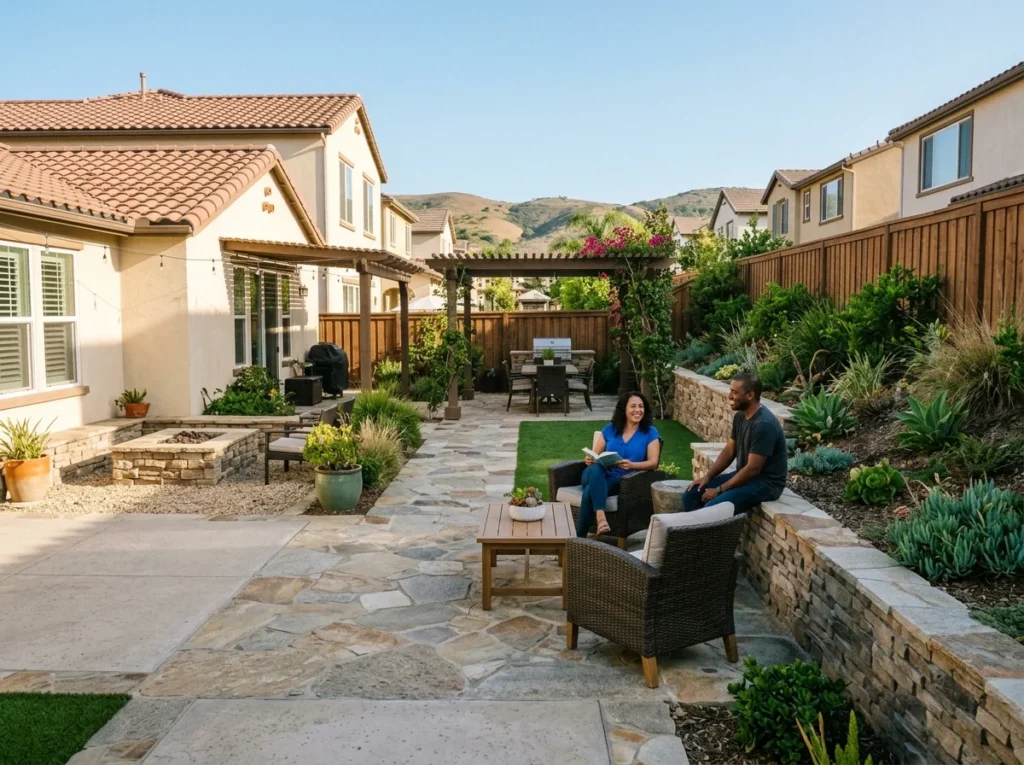
Most people do not remodel a yard just to add more stone or concrete. They usually want to fix a problem or make the space easier to use.
A worn patio may no longer suit the family. An uneven path may make access harder. Water may collect in a low part of the yard. A sloped area may also be difficult to use for seating or planting.
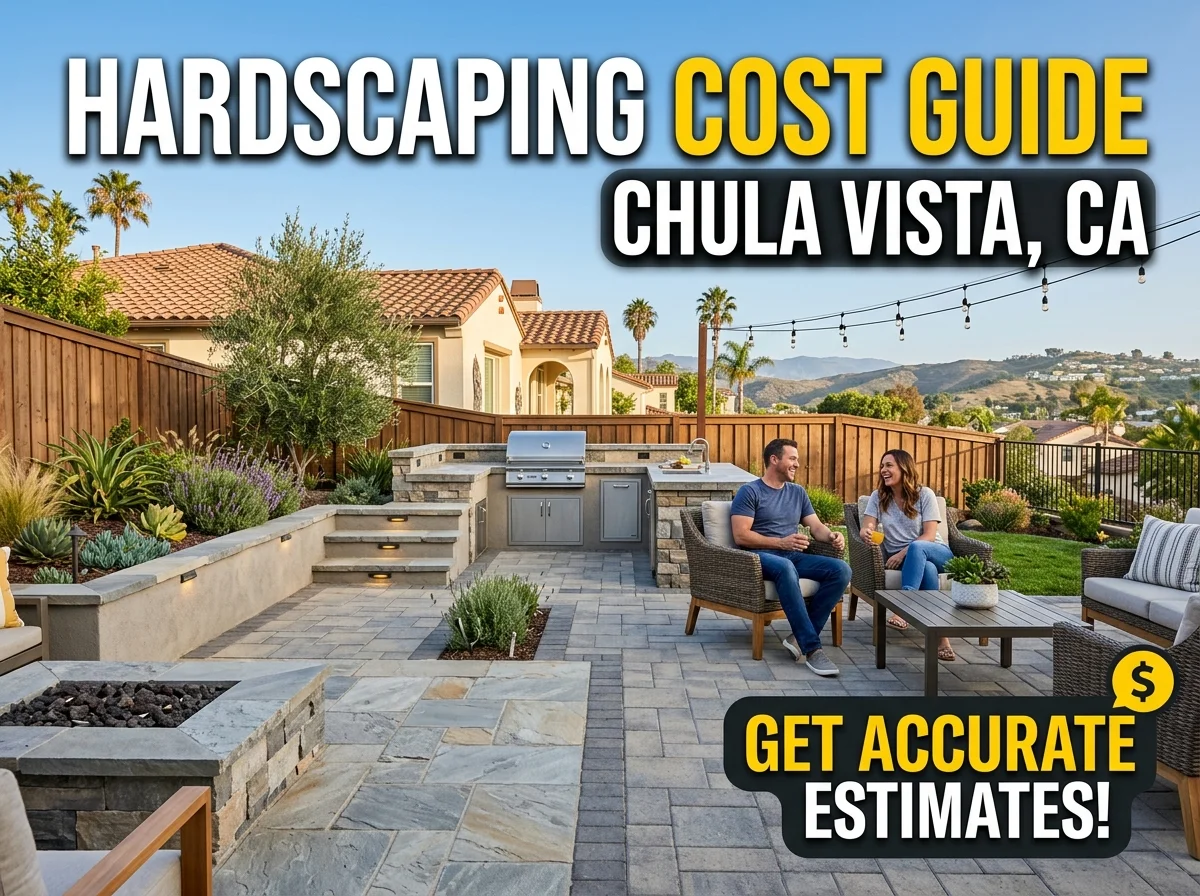
Hardscaping can help define these spaces. A patio creates a clear place for a table and chairs. A walkway gives people a better route through the property. A retaining wall can help manage a change in grade while shaping a garden or outdoor area.
In Chula Vista, many homeowners also make outdoor space part of a larger remodel. That might mean connecting a patio to a side yard, creating a seating area, or replacing old concrete with a new layout that fits the home better.If the project also involves expanding the house, reviewing home addition options in Chula Vista can help homeowners plan the indoor and outdoor spaces together.
The key is to plan around the site first. Existing slopes, gates, walls, planting beds, and drainage paths can all affect the design.
What Hardscaping Projects Can Change a Backyard?
The right project depends on what the yard is missing. Some spaces need a better place to sit. Others need safer movement or better control of slopes and runoff.
A full backyard plan may include more than one feature. The best results usually come when those features feel connected instead of added one at a time.
Patio Installation
A patio gives outdoor furniture a proper place. It can support dining, grilling, relaxing, or a small gathering area without paving the whole yard.
The first question is size. A patio should be large enough for its purpose but not so large that it takes over the landscape. Door locations, furniture, nearby plants, shade, and walking routes should all shape the layout.
For patio installation in Chula Vista, homeowners may consider concrete, pavers, flagstone, or natural stone. Each creates a different look and may suit a different type of property.
A paver patio gives more choice in pattern and shape. Concrete gives a continuous surface. Natural stone can work well where a less uniform finish fits the yard.
Drainage also needs attention. The surface should not send water toward the house or into a low spot beside the patio.
Walkways and Paver Paths
A good walkway makes movement feel natural. It may connect the driveway to a gate, link the house to a patio, or create a clear path through the backyard.
Material choices include concrete, brick pavers, decorative pavers, flagstone, and natural stone. The best choice depends on the look of the home and how often the path will be used.
Walkway pavers in Chula Vista can work well where homeowners want more design choice than a plain concrete path. Still, appearance should not be the only concern.
Width matters. So do turns, steps, slope, and drainage. A path that looks attractive but forces people into sharp turns or narrow gaps will soon feel frustrating.
The route should make sense before anyone chooses the pattern.
Retaining Walls
Retaining walls are useful where the yard changes height. They can support soil, divide different levels, define planting areas, or form part of a larger hardscape plan.
A wall that holds back soil is more than decoration. Its base, drainage, height, surrounding grade, and site conditions all matter.
Water is a major concern. If it has nowhere to go, pressure can build behind the wall. For that reason, retaining wall installation should be planned with drainage rather than treated as a separate issue.
A retaining wall in Chula Vista may use retaining wall blocks, stone, or another suitable system. The choice should fit the job first and the design second.
Garden walls and low seating walls may have a different purpose. A contractor should be clear about what the wall needs to do before recommending materials.
Outdoor Kitchens, Fire Pits, and Seating Areas
These features can make a patio more useful, but they need space around them. Adding them after the layout is finished can create tight walkways or awkward seating.
An outdoor kitchen should not block the main route between the home and the yard. A fire pit needs room for seating and movement. Built-in seating should feel like part of the patio, not something forced into an empty corner. When outdoor work is part of a broader renovation, kitchen remodeling may also need to be considered as part of the overall plan.
For larger outdoor living projects in Chula Vista, it often makes sense to plan these features at the same time as the patio or walkway. That creates a more natural flow.
How Do You Choose the Right Hardscape Material?
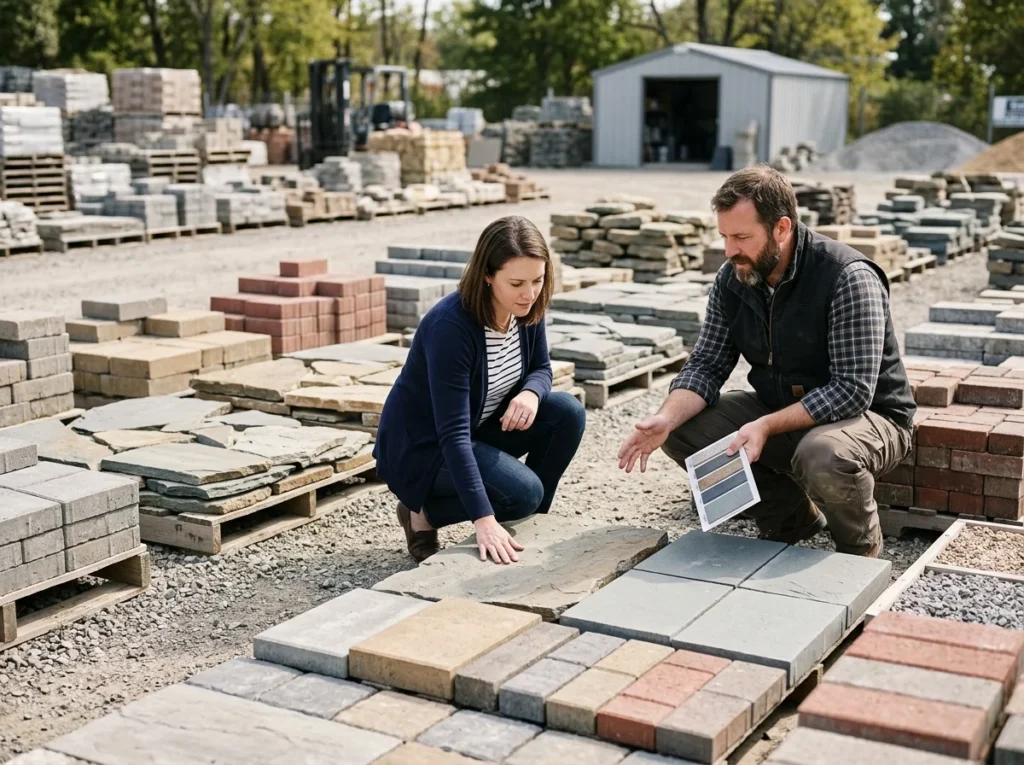
Start with use, not appearance. A main walkway has different needs from a decorative garden edge. A patio used every weekend may also need a different surface from a small seating area.
Here are some common choices:
- Concrete pavers: Good for patterns, defined edges, and flexible layouts.
- Natural stone: Useful for a more organic or varied look.
- Flagstone: Often suits informal patios and stone walkways.
- Brick pavers: Can create a traditional look with clear patterns.
- Concrete: Provides one continuous surface for patios or paths.
- Retaining wall blocks: Made for wall systems in different shapes and finishes.
- Decorative gravel: Better suited to selected low-traffic areas and landscape borders.
Maintenance should also be part of the decision. Some homeowners prefer a simple surface with fewer joints. Others like the look of separate pavers or natural stone.
Think about repairability too. If one part of a surface is damaged, some materials may allow a small section to be addressed without replacing the whole area.
The house itself can guide the choice. A clean, simple exterior may suit straight lines and uniform pavers. A more natural yard may look better with stone and softer edges.
How Can Hardscaping Help With Drainage and Erosion?
Hardscaping can help control water only when drainage is planned into the project. Adding a patio or walkway changes how water moves across the ground.
That change may be small, but it still matters. A hard surface does not absorb water like open soil or a planted area. The finished grade needs to send runoff in a sensible direction.
Retaining walls also need careful planning. Water moving through soil can collect behind a wall if there is no path for it to escape.
Look closely at the yard before new work starts. Warning signs can include:
- Water collecting next to an existing patio
- Soil washing away from a slope
- Small channels forming after runoff
- Damp or low areas beside walkways
- Cracked surfaces near drainage problems
- Water moving toward the house instead of away from it
Not every drainage problem needs the same fix. Grading, drainage routes, retaining structures, and existing hardscape may all play a part.
This is one reason backyard hardscaping should be planned as a whole project. Fixing one area while ignoring water movement elsewhere can create another problem nearby.
What Should You Check Before Starting a Hardscaping Project?
Decide how you want to use the space before choosing finishes. That one step can prevent many poor design choices.
A small patio for two people needs a different layout from a large entertaining area. A side-yard path also has different needs from the main walkway to the front door.
Before work starts, review:
- Layout: Where will people sit, walk, enter, and leave?
- Drainage: Where does water move now?
- Slope: Will grade changes affect steps, walls, or access?
- Material: Does it suit the intended use?
- Access: Can workers and materials reach the site?
- Existing features: What happens to old concrete, planting beds, fences, or walls?
- Maintenance: How much care do you want the surface to need?
- Home design: Will the new work look connected to the house?
Some projects may also need local review or approvals based on the work involved. That should be checked for the actual project rather than assumed. If the hardscape work is part of a larger renovation, whole-home remodeling contractors in Chula Vista can help coordinate the broader project scope.
Why Does Professional Hardscape Installation Matter?
Hardscape installation depends on work that homeowners may never see once the job is complete.
Take a paver patio. The pavers sit on prepared layers below the surface. If the base is poorly prepared, the finished area may not stay as even as intended.
Grading matters for the same reason. A surface needs enough slope to move water without making the patio or walkway uncomfortable to use.
Edge restraint can help keep a paver layout defined. Walkways need smooth transitions. Retaining walls need support and drainage that suit the job.
A professional hardscape contractor should think about these details before the final surface goes down.
This also helps different features work together. A patio should meet the walkway cleanly. A wall should not block needed drainage. Landscape edging should fit the larger layout instead of creating sharp, random breaks.
How Do You Compare Hardscaping Contractors in Chula Vista, CA?

Do not compare contractors by price alone. First compare what each contractor plans to do.
Two estimates can look similar while covering very different work. One may include old concrete removal, grading, and drainage. Another may cover only the new surface.
Ask each contractor about:
- Similar projects they have completed
- How they plan to prepare the base
- How they will handle existing drainage
- What materials they suggest and why
- What demolition or removal is included
- How the new work will meet existing surfaces
- What the written scope includes
- How site access may affect the work
Pay attention to the questions the contractor asks as well. A good discussion should cover how you use the yard, where water moves, what problems exist now, and what you want to change.
Hardscaping costs can depend on project size, materials, demolition, access, grading, drainage, retaining structures, and design complexity. Existing conditions can also change the scope. If your project includes several areas of the property, whole-home remodeling may be another option to consider when planning the work as one larger renovation.
If you are comparing hardscape contractors, make sure you are comparing the same work. A lower number means little if major parts of the project are missing from the estimate.
AHI Restoration can be part of that conversation for homeowners planning residential improvements in Chula Vista. Start with the site and the problem you want to solve. Material choices make more sense after that.
FAQs
How much does hardscaping cost in Chula Vista?
Hardscaping costs vary by project size, materials, access, demolition, grading, drainage, and site conditions. A contractor should review the property before giving a useful project estimate.
What is the best material for a backyard patio?
There is no single best material. Concrete, pavers, flagstone, and natural stone can all work well. The right choice depends on use, maintenance, drainage, and design.
Can a retaining wall help with erosion?
A retaining wall can help manage soil and grade changes, but drainage still needs proper planning. The right solution depends on the slope, runoff, and site conditions.
How long does a hardscaping project take?
The schedule depends on project size, site access, demolition, grading, drainage work, materials, and design. A contractor can give a better estimate after reviewing the full scope.
Plan Your Chula Vista Hardscaping Project With AHI Restoration
If you are comparing Hardscaping Contractors Chula Vista CA homeowners can start by looking at the yard itself: how water moves, where people walk, and how the space should be used. AHI Restoration can discuss your patio, walkway, retaining wall, or outdoor living plans and help you review the project scope before you request an estimate. Contact AHI Restoration to discuss your project and next steps.