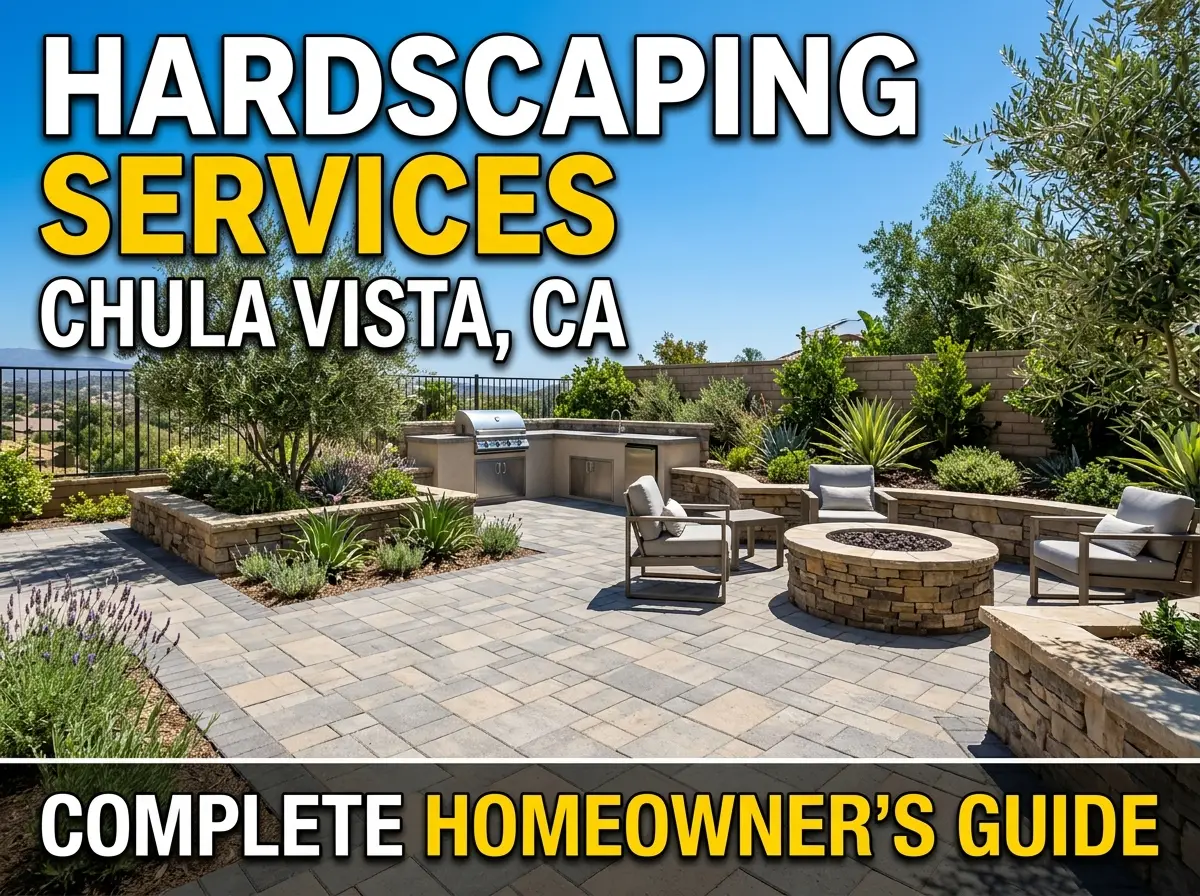
Hardscaping can turn an underused yard into a comfortable outdoor living space. Patios, paver walkways, retaining walls, driveways, fire pits, and outdoor kitchens can make a property easier to use while giving the landscape a clear structure. For homeowners planning hardscaping in Chula Vista, the right design also needs to account for slope, drainage, water use, sun exposure, and the way the space will be used.
This guide explains the main hardscaping services available, how Chula Vista conditions can affect a project, what to consider before construction, and how to choose the right contractor. It also covers options for both residential properties and commercial hardscaping in Chula Vista.
What Is Hardscaping?
Hardscaping is the non-living part of an outdoor space. It includes built surfaces and structures such as patios, walkways, retaining walls, driveways, steps, outdoor kitchens, fire pit areas, and paver installations.
Landscaping focuses more on living elements such as trees, shrubs, flowers, and grass. A good outdoor design combines both. Hardscape features create the structure, while plants soften the space and add color and shade.
For example, a backyard might use a paver patio as the main gathering area, a walkway connecting the patio to the side yard, and drought-tolerant plants around the edges. The result is more functional than simply adding plants or replacing an old lawn.
Which Hardscaping Services Can Improve a Chula Vista Property?
The best feature depends on the property and how you want to use it. Common options include:
Patio Installation
A patio creates a defined area for outdoor dining, seating, or entertaining. Concrete, pavers, and natural stone can all be used, depending on the desired appearance, maintenance needs, and site conditions.
Good patio installation starts with the layout and base preparation. The finished surface should also work with the property’s drainage pattern.
Paver Walkways and Paver Installation
Paver walkways can make movement between the front yard, backyard, driveway, and outdoor living areas easier. Pavers are available in many colors, shapes, and patterns, making them useful for both traditional and modern designs.
Proper base preparation and edge restraint are important parts of paver installation. These details help the finished surface remain stable and easier to maintain.
Retaining Walls
Retaining walls can help manage changes in elevation and define different areas of a yard. They can also be used to create planting areas or make a sloped property easier to use.
The design needs to account for soil pressure and drainage. In Chula Vista, retaining walls can also involve local planning and permit requirements. The city states that certain walls three feet or less may be exempt from a building permit if specific conditions are met, but zoning requirements can still apply.
Outdoor Kitchen Construction
An outdoor kitchen can extend the usable living area beyond the house. Depending on the design, it may include counters, storage, cooking equipment, and a dining or seating area.
The location should be planned around access, utilities, shade, ventilation, and the rest of the patio. Connecting the kitchen to existing outdoor areas can also make the overall layout feel more natural.
Fire Pit Installation
A fire pit can create a dedicated gathering area for evenings outdoors. Its placement should leave enough usable space around the feature and should follow applicable safety and local requirements.
Driveway Paving
Driveways have to handle regular vehicle traffic, so appearance is only one part of the decision. The surface, base, drainage, access, and transition to the street all need to be considered during planning.
Why Does Chula Vista’s Climate Matter?
Climate can influence both the materials and layout selected for a hardscape project. Chula Vista includes coastal and inland areas with different conditions. The city’s WaterSmart guidance notes that areas east of I-805 are generally warmer and drier, while areas west of I-805 are generally cooler and wetter.
That difference can affect planting, irrigation, shade, and how water moves through a property. A well-planned water-wise hardscape design can reduce the amount of landscape area that needs regular irrigation while still providing useful outdoor spaces.
Chula Vista also has a Landscape Water Conservation Ordinance for new or rehabilitated landscapes. Depending on the project, homeowners may need a Landscape Documentation Package or WaterSmart Checklist. The city also provides water-conservation resources and rebate information.
This makes drought-tolerant landscaping a useful consideration when hardscape and planting plans are being developed together.
How Should Drainage Be Planned?
Drainage should be considered before the surface is installed, not after water begins collecting.
Patios, walkways, driveways, walls, and planting areas all change how rain and irrigation water move across a property. The finished design should direct water away from areas where it could cause standing water or damage.
This is especially important on sloped properties. A contractor may need to consider grading, surface slope, drainage channels, soil conditions, and the location of existing drains.
Chula Vista also advises residents that landscape irrigation runoff should not enter storm drains.
A thoughtful design can therefore improve both everyday usability and water management.
What Should You Consider Before Starting Hardscaping?
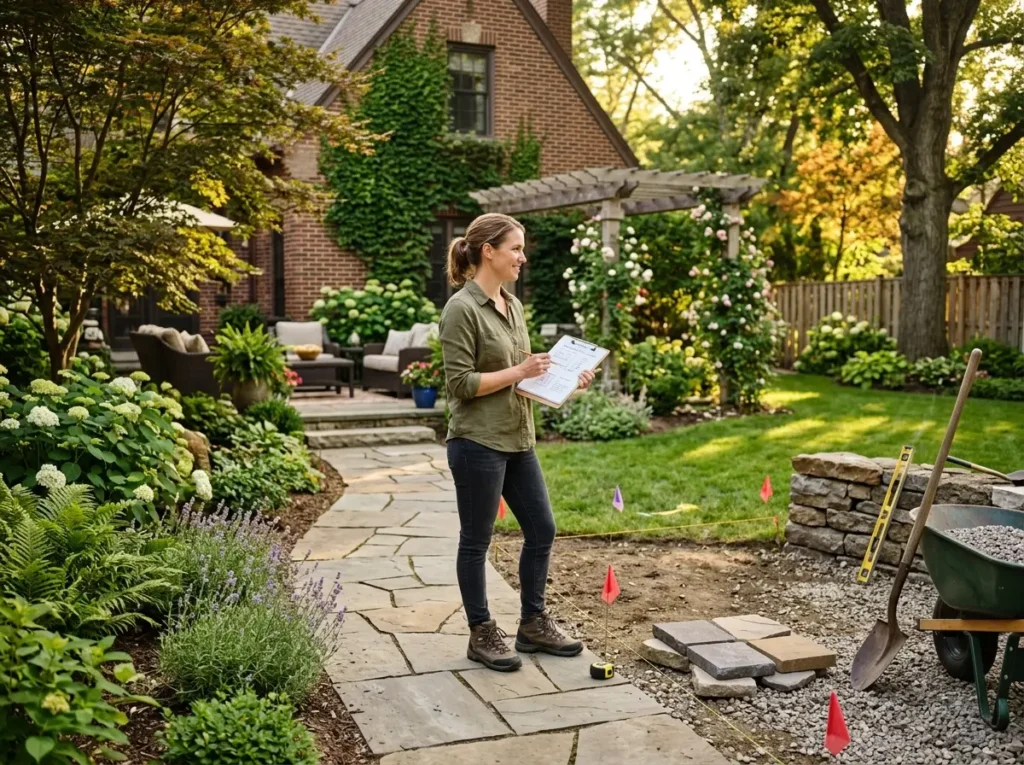
Start with how you want to use the space. Do you need a dining area, a safer walkway, a larger driveway, better access across a slope, or a place for outdoor cooking?
Then look at the property itself. Existing concrete, trees, fences, walls, gates, drainage paths, slopes, and utility locations can all affect the design.
Material selection comes next. Concrete may suit a simple layout, while pavers can provide more pattern and design flexibility. Natural stone can create a different visual character. The right choice depends on appearance, use, maintenance, and the existing home.
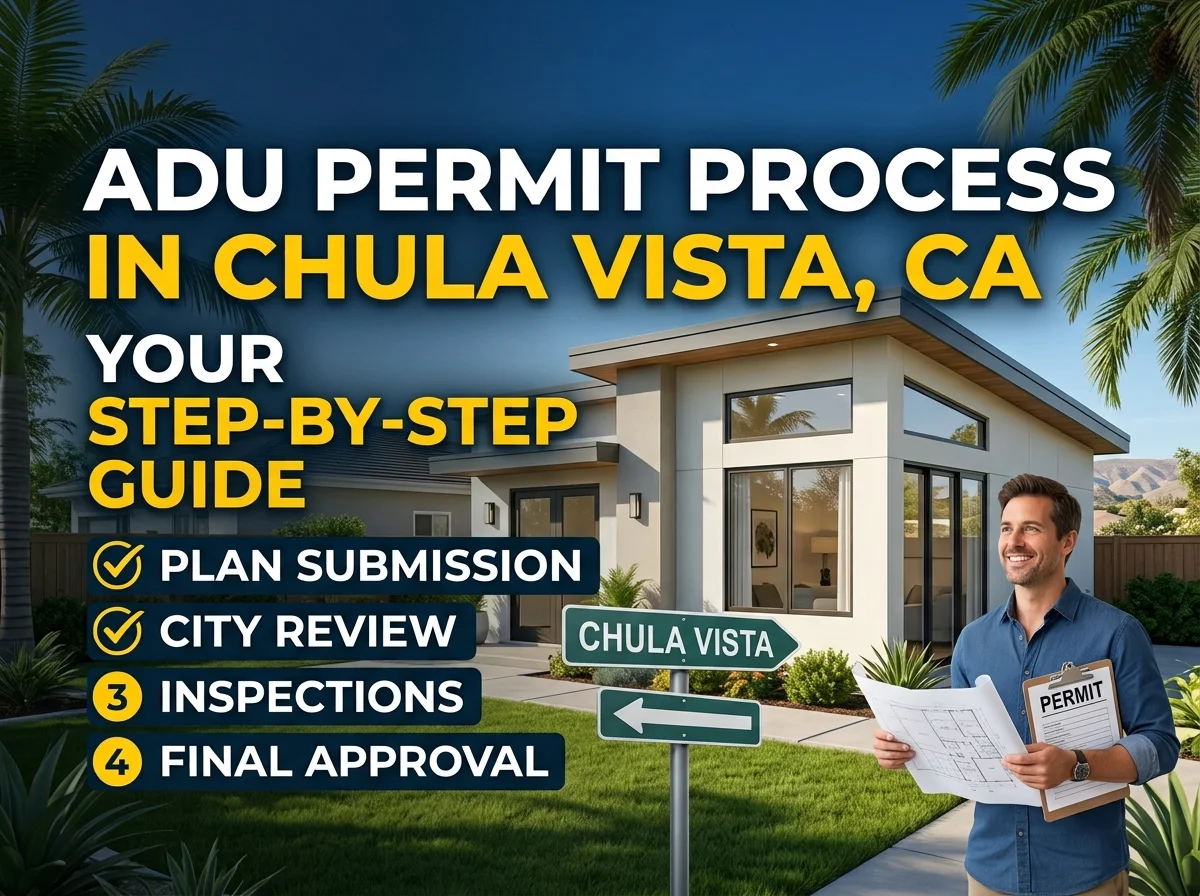
It is also worth checking HOA requirements and local permitting before construction. Chula Vista requires contractors performing work in the city to have a valid city business license, and applicable projects must comply with current codes and permit requirements.
How Do You Choose a Hardscaping Contractor in Chula Vista?
Choosing a hardscaping contractor in Chula Vista should involve more than comparing the lowest estimate.
Look for a contractor who can explain the complete scope, including demolition, grading, base preparation, drainage, installation, and finishing. Ask who will manage each part of the work and whether permits are needed.
It is also useful to review projects similar to yours. A contractor experienced with a flat backyard may approach a steep site differently from a team that regularly handles retaining walls and complex grades.
AHI Restoration provides hardscaping services in Chula Vista, including patios, driveways, walkways, retaining walls, outdoor kitchens, pavers, stamped concrete, and fire features. The company states that its process includes design, permitting, grading, and installation.
You can also review the company’s broader home remodeling services if your outdoor project is part of a larger property renovation.
Can Hardscaping Work for Commercial Properties?
Yes. Commercial hardscaping in Chula Vista can improve the appearance and function of offices, retail properties, multi-unit buildings, and other commercial sites.
Commercial projects may include paved walkways, entry areas, patios, parking-related surfaces, retaining walls, landscape borders, and outdoor gathering areas. Accessibility, drainage, durability, site access, and local requirements become especially important when a property serves employees, customers, or tenants.
A commercial hardscaping contractor should understand that these projects often need to balance appearance with regular foot traffic, maintenance, safety, and the existing site plan.
What About Outdoor Living Spaces?
Outdoor living spaces work best when several features are planned as one layout instead of being added separately.
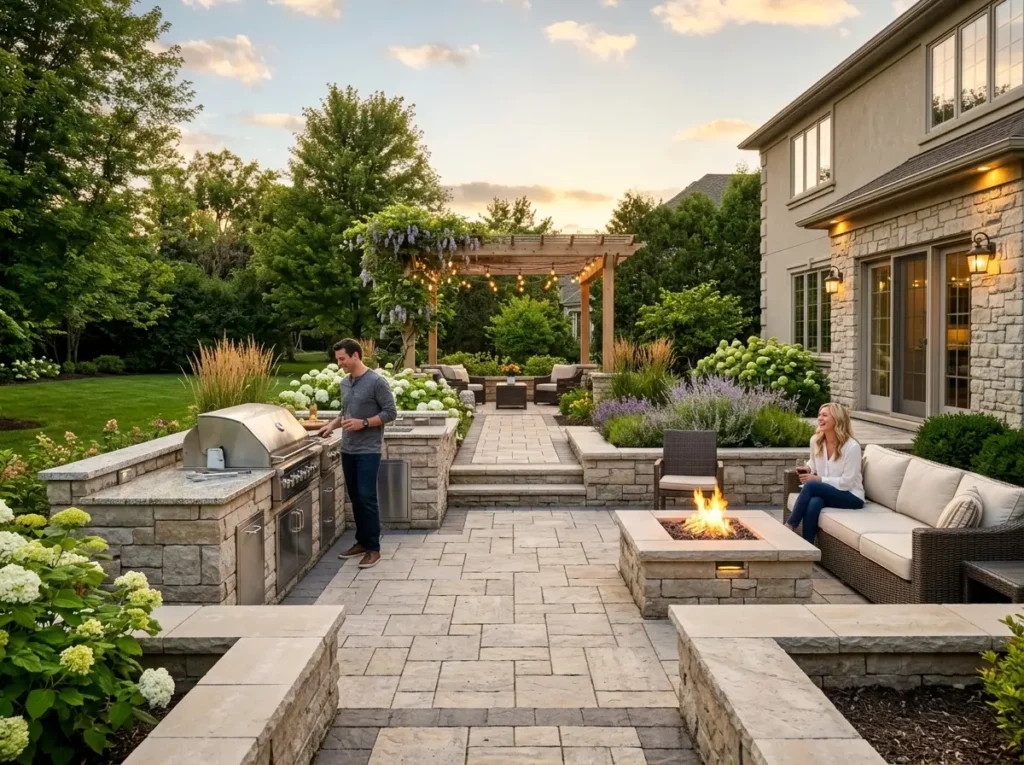
For example, a patio can connect directly to an outdoor kitchen, with a walkway leading to another part of the yard. A fire pit can sit in a separate seating area, while low-water planting surrounds the hardscape.
Landscape lighting can also improve visibility along walkways and around gathering areas. The goal is not to fill every part of the yard with hard surfaces. It is to create clear, useful spaces that fit the property.
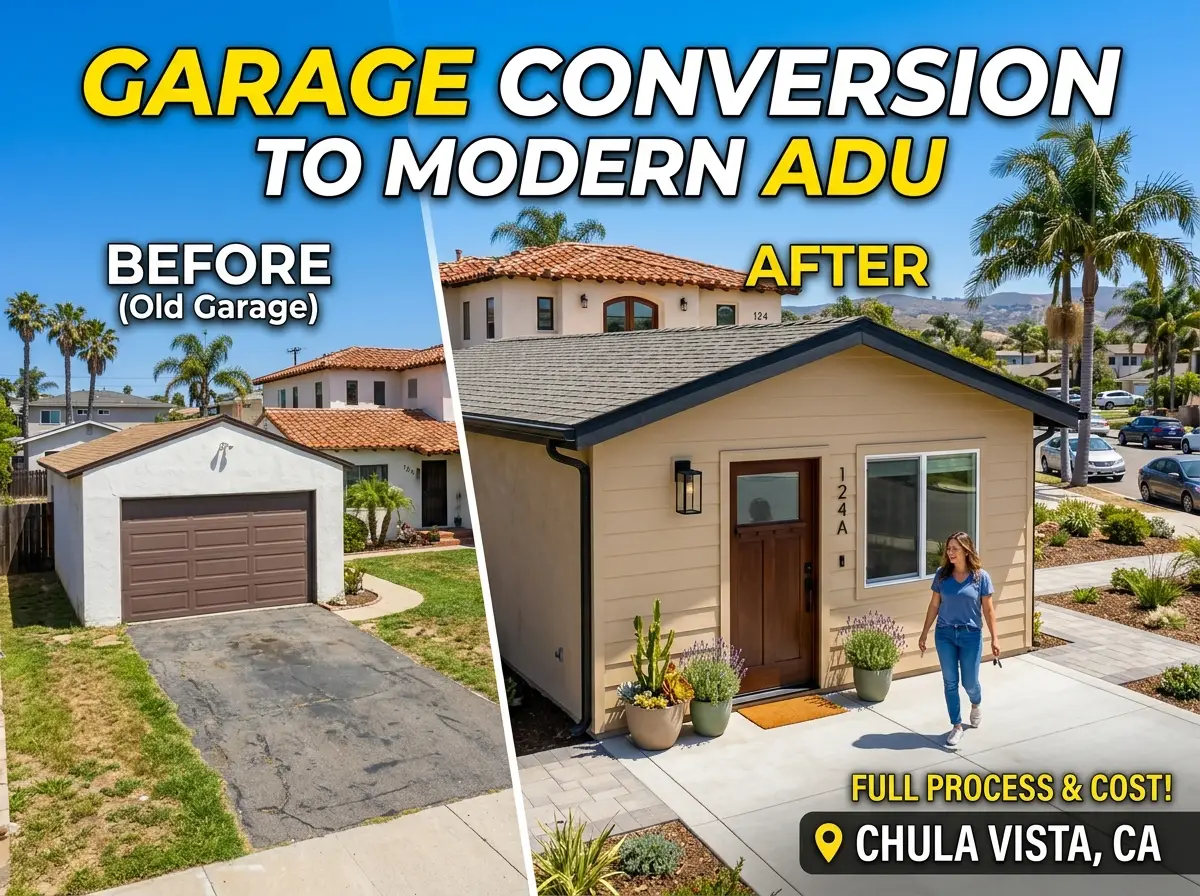
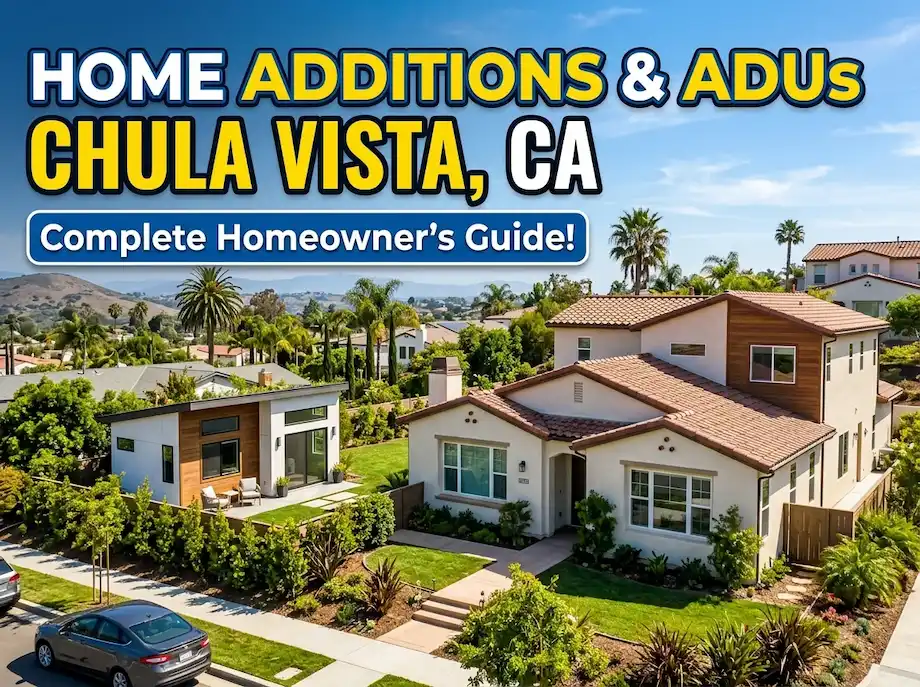
If your project also involves expanding the home, planning the exterior alongside a Chula Vista home addition or ADU can help the indoor and outdoor layouts work together.
What Are the Benefits of Professional Hardscaping?
Professional installation helps address the parts of a project that are easy to overlook. Proper grading, base preparation, drainage, transitions, and material installation all affect how the finished space performs.
It can also make the design more cohesive. A patio should connect naturally with walkways. Retaining walls should work with the grade. Driveways should meet existing access points cleanly.
For larger projects, having one team coordinate the design and construction can also simplify communication. AHI Restoration describes its hardscaping work as a full-scope process covering planning through installation.
Frequently Asked Questions
What is the difference between hardscaping and landscaping?
Hardscaping covers non-living features such as patios, pavers, retaining walls, driveways, and walkways. Landscaping generally refers to living elements such as plants, trees, grass, and shrubs. Both can be planned together.
What is the best material for a Chula Vista patio?
There is no single best material for every property. Concrete, pavers, and natural stone can all work. The right option depends on the home’s style, drainage, intended use, maintenance needs, and design preferences.
Do retaining walls require permits in Chula Vista?
Some small retaining walls may be exempt from a building permit when specific conditions are met. However, zoning rules can still apply. Larger or more complex walls may require permits and supporting documents. Check current city requirements before construction.
Is drought-tolerant landscaping useful with hardscaping?
Yes. Combining hardscape features with drought-tolerant plants can create an attractive outdoor space while reducing the amount of landscape area that needs regular irrigation. Chula Vista provides water-conservation guidance for local landscapes.
How much does hardscaping cost in Chula Vista?
There is no reliable single price because costs depend on the size of the project, materials, demolition, grading, drainage, access, and site conditions. A property assessment and detailed scope are needed for a useful estimate.
Plan Your Hardscaping Project in Chula Vista
Good hardscaping in Chula Vista starts with the property, not the material catalog. The best design considers how you use the yard, how water moves across it, the local climate, and how each feature connects to the next.
Whether you need a new patio, paver walkway, retaining wall, driveway, outdoor kitchen, or complete outdoor living area, careful planning can make the finished space more practical and easier to enjoy. AHI Restoration works with Chula Vista homeowners on hardscape design and installation. You can contact AHI Restoration to discuss your outdoor space and the next steps.