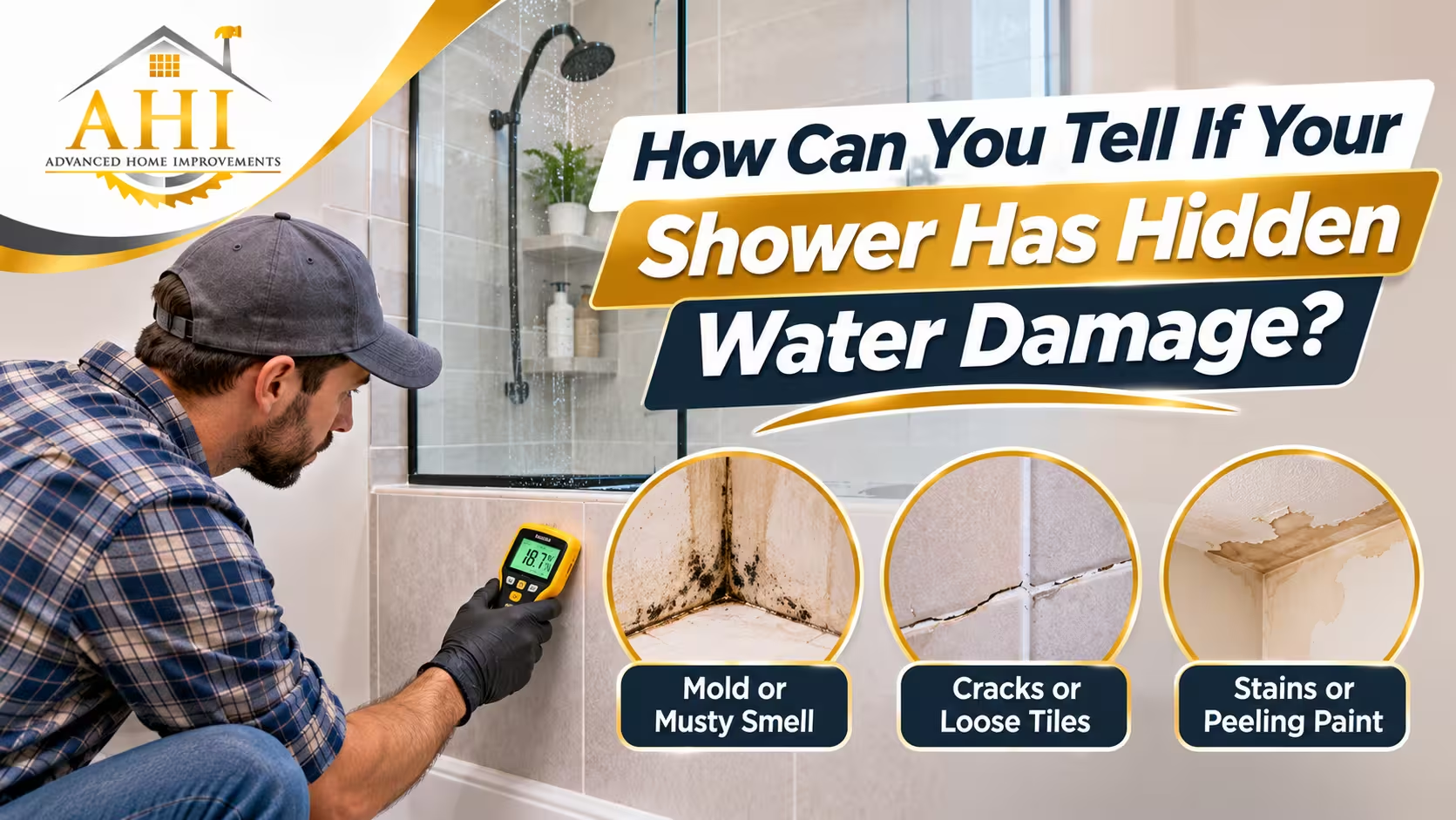
You notice the bathroom floor feels damp long after a shower, or a musty smell seems strongest near one wall. There may be no puddle or dripping pipe, yet something feels different. These changes deserve attention because water can travel behind tile and remain out of sight.
The challenge is figuring out whether moisture comes from normal humidity, a plumbing leak, or a failure in the shower assembly. Each source leaves different clues. Noting where the damage occurs and how it changes over time helps identify what needs inspection and when professional assistance may be necessary.
Start With Where the Moisture Appears
The location of a stain or damp area can help narrow down the problem. Moisture can move through framing or under flooring before becoming visible on the surface.
| Where you notice a change | What it may point to |
| Wall beside the shower | Failed joint, waterproofing, valve, or supply line |
| Floor at the shower entrance | Poor door seal, curb, or shower pan issue |
| Ceiling below the bathroom | Drain, pan, or plumbing leak |
| Baseboard outside the bathroom | Moisture beneath flooring or inside a wall |
| Wall on the other side of the shower | Concealed pipe or wet wall cavity |
This is a starting point, not a diagnosis. A stain below a bathroom may come from a toilet, sink, or another plumbing line.
Notice When the Dampness Appears
Timing can be as useful as location. If water appears only while someone showers, the enclosure, drain, pan, or waterproofing system may be involved. If a wall becomes damp when the shower has not been used, a pressurized supply line or another plumbing source deserves attention.
Photograph the mark and compare it over several days. Do not deliberately reproduce a leak.
What Changes in the Shower Surface Can Tell You
Tiles and grout are the visible finish, not the complete waterproofing system. A waterproofing layer and suitable backer materials should sit behind them. Damage or poor connections to the pan or drain may let moisture reach the wall cavity.
Watch for these changes:
- Tiles that shift or sound hollow: the bond or material beneath them may have deteriorated.
- Grout that repeatedly cracks: movement or ongoing moisture may be affecting the surface.
- Caulk separating at corners: water may pass through the joint, although new caulk will not repair a failed membrane.
- A curb or floor that feels unstable: the pan, framing, or subfloor may be affected.
A cracked grout line alone does not prove a leak; concern rises when odors, stains, or soft materials appear too.
Hidden Damage Beneath the Shower Floor
A shower pan directs water toward the drain. If its liner, membrane, or drain connection fails, water may reach the subfloor. The first clue might appear outside the shower: a soft spot, swollen flooring edge, loose baseboard, or ceiling discoloration below.
Do not press hard on a soft floor or remove tiles to investigate. Keep people away from visibly weakened flooring until it is assessed.
Is It a Leak or Bathroom Condensation?
Bathrooms naturally produce steam. Condensation is more likely when moisture appears on mirrors, windows, or cool surfaces after a hot shower and clears as the room ventilates. A leak is more concerning when one area stays damp, a stain expands, flooring swells, or a musty odor persists.
Check whether the exhaust fan works and whether the room dries between uses. Poor ventilation can encourage surface mold, but it does not explain every damp wall or floor.
What a Professional Inspection Should Establish
An inspection should identify the source and affected materials. It may include:
- Moisture readings: A meter compares suspect areas with nearby materials. Readings need context because materials have different baselines.
- Plumbing checks: A plumber may inspect the valve, supply lines, drain, and connections for an active leak.
- Shower assembly review: The pan, curb, joints, and accessible waterproofing details may need evaluation.
- Damage assessment: The inspector checks whether drywall, backer board, insulation, framing, or subfloor materials are wet or deteriorated.
Thermal imaging shows temperature patterns, not water itself, and must be interpreted with other evidence.
When to Stop Using the Shower
Stop using the shower and arrange prompt help if water is actively escaping, stains are spreading, flooring feels soft, or tiles and surrounding materials are moving. When water reaches electrical fixtures, stay clear of the affected area and contact a qualified professional for help. Do not disturb a sagging ceiling or unstable floor.
AHI Restoration can assess visible damage and help plan restoration. A licensed plumber may need to repair a leaking line, valve, or drain. Replacing finishes before fixing the source can lead to recurring damage.
The U.S. Environmental Protection Agency recommends drying wet materials within 24 to 48 hours when possible to help prevent mold growth. A dry-looking tile surface does not prove the wall behind it is dry. In Chula Vista, the response depends on the source and extent of moisture.
Frequently Asked Questions
Can water get behind shower tiles if the grout looks fine?
Yes. Water may enter through plumbing penetrations or defects in the waterproofing system. Intact-looking grout does not guarantee that the membrane and drain connections are sound.
Does a musty smell always mean a shower leak?
No. Poor ventilation and damp towels can cause odors. A persistent smell near one wall or floor, especially with staining or soft materials, deserves investigation.
Can a shower leak damage the subfloor?
Yes. Water escaping from a failed pan or drain connection can reach the subfloor and cause swelling or deterioration if the problem continues.
Will replacing cracked grout stop a suspected leak?
Not necessarily. Grout is not the primary waterproofing layer. If moisture has reached the wall or floor assembly, the underlying cause must be identified.
Final Thoughts: Find the Source Before Repairing the Surface
A damp patch, loose tile, or musty odor may point to a problem hidden behind the shower. Consider the location and timing rather than relying on one clue. An inspection can distinguish condensation from plumbing or waterproofing failure and guide repairs. AHI Restoration can help assess the affected materials.