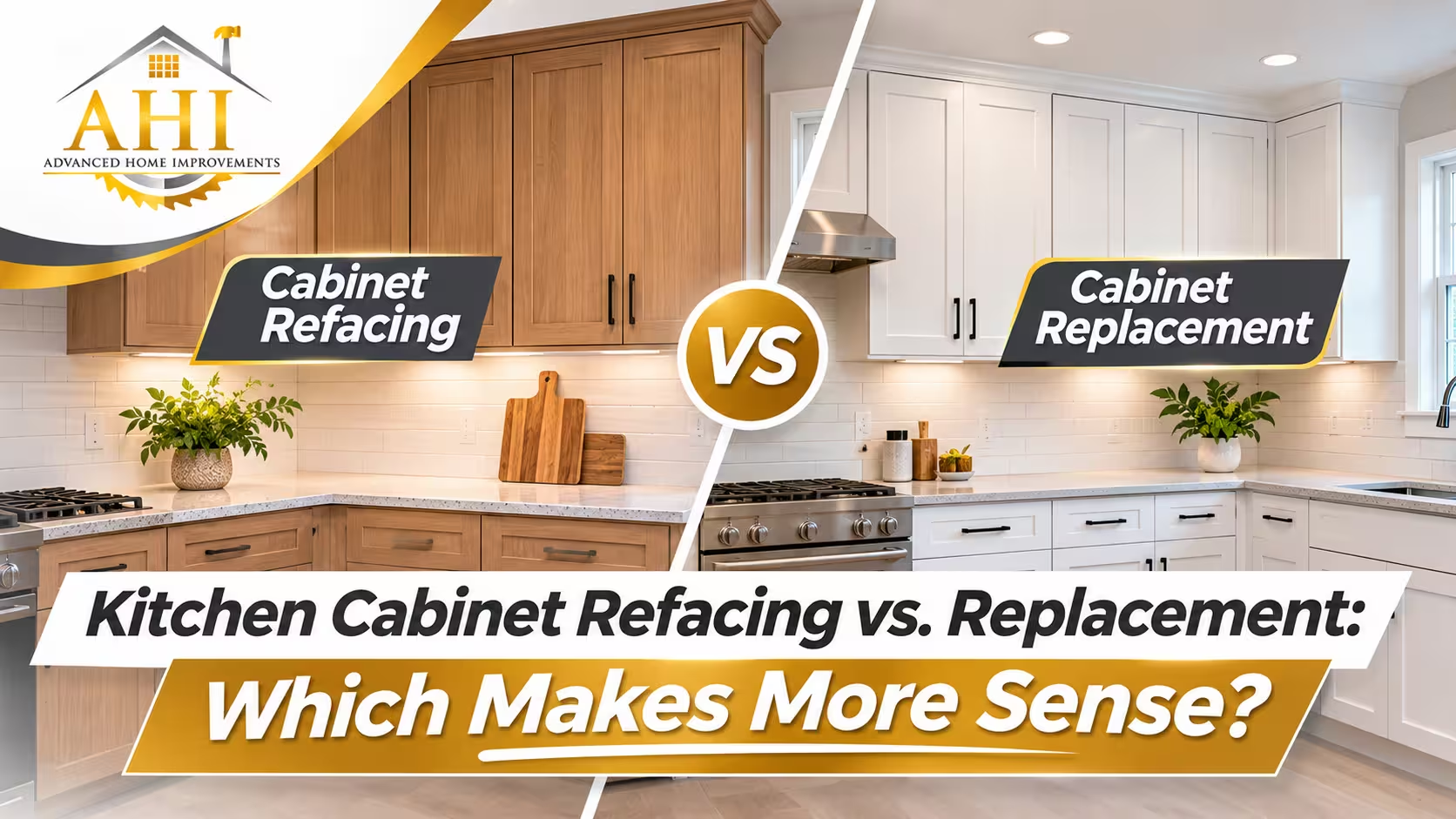
Kitchen cabinets have a major influence on how your kitchen looks and functions, but an outdated appearance does not always mean the entire cabinet system needs replacing. If the doors look worn while the cabinet boxes remain sturdy, refacing may offer a practical way to update the space without removing everything.
However, damaged cabinet frames, poor storage, or a layout that no longer suits your needs can make full replacement a better investment. Understanding kitchen cabinet refacing vs. replacement helps you compare project costs, material quality, durability, and design flexibility before committing to a renovation.
What Is the Difference Between Refacing and Replacing Cabinets?
The refacing process refreshes the cabinet’s outward appearance without removing or rebuilding its existing structure. The work commonly includes new doors and drawer fronts, veneer or laminate over exposed face frames, finished end panels, and updated hinges or handles. The cabinet framework stays in place, so the kitchen footprint does not change.
Replacement removes existing cabinets and installs new stock, semi-custom, or custom units. It allows layout and storage changes, but may also affect countertops, flooring, plumbing, or electrical work.
| Project detail | Refacing | Replacement |
| Cabinet boxes | Existing boxes remain | New boxes installed |
| Doors and drawer fronts | Usually replaced | New |
| Layout | Stays the same | Can be redesigned |
| Demolition | Usually limited | Existing cabinets removed |
| Storage changes | Limited | More flexibility |
When Is Kitchen Cabinet Refacing Worth It?
Refacing makes sense when cabinet boxes are sturdy, dry, square, and firmly attached. It works well when you like the kitchen layout but want a different door style, color, finish, or hardware.
Inspect the framework, especially around the sink. Look for swollen panels, loose joints, sagging shelves, and misaligned doors. Veneer cannot restore water-damaged particleboard.
Refacing is a good candidate when:
- Cabinet boxes have no significant water damage, swelling, or structural movement.
- The layout provides enough counter space and storage.
- You are happy with the locations of major appliances and plumbing.
- The main problems are dated doors, worn finishes, or old hardware.
When Should You Replace Kitchen Cabinets?
Replace cabinets when boxes are damaged, the layout fails your needs, or storage must change. New doors cannot fix boxes separating from walls, sagging, or deteriorating around plumbing.
Material matters. Plywood can be durable, while particleboard may swell after leaks. MDF is common in painted doors and panels, but damaged edges need attention. Solid wood is another option; not every cabinet component needs to use it.
Consider replacement if you need:
- More drawers, pull-outs, or better corner-cabinet access.
- A different cabinet footprint, island, or appliance arrangement.
- New cabinet heights or deeper storage.
- Repairs to several boxes, shelves, or structural connections.
Cabinet Refacing Cost vs. Replacement
Refacing often costs less because it retains existing boxes and avoids much of the removal and installation work. The price still depends on cabinet quantity, door style, veneer, finish, hardware, end panels, and repairs.
Fixr’s January 2026 national figures put refacing at $3,000–$13,500, with an $8,250 average. New stock cabinets are estimated at $100–$300 per linear foot installed, semi-custom at $150–$650, and custom at $500–$1,200.
A 2026 Chula Vista cost model estimates refacing at $6,100–$27,000, with a $12,800 midpoint, or $300–$900 per linear foot. That local figure is a modeled estimate, not a contractor quote; the difference between sources reflects varying assumptions and project scopes.
Ask for an itemized estimate covering:
- Door and drawer-front quantities and materials.
- Veneer, laminate, and finished end panels.
- Hinges, drawer slides, pulls, and other hardware.
- Box repairs, demolition, disposal, and installation.
- Countertop, backsplash, flooring, or plumbing work, if included.
Compare quotes with the same scope; a low refacing price may exclude box repairs or upgraded hardware.
Durability, Timeline, and Long-Term Value
Refacing can last for many years when the original boxes are sound and new materials are installed correctly. Its lifespan remains tied to the framework you keep; veneer only improves the appearance of weakened boxes.
Replacement provides a new cabinet system, but durability still depends on construction, hardware, installation, and moisture control. Neither option guarantees a resale return; buyers also consider layout, workmanship, storage, and overall home condition.
Refacing usually means less demolition and a shorter on-site process. Replacement takes longer because old cabinets must be removed and new units fitted. Material lead times can extend either project.
A Practical Way to Choose
Before requesting estimates, ask:
- Are the boxes sound? Look for swelling, leaks, loose joints, and sagging.
- Does the layout work? Refacing cannot solve an inefficient arrangement.
- What needs to change? New doors and finishes suggest refacing; new storage or cabinet locations point toward replacement.
- What is included? Compare materials, hardware, labor, repairs, disposal, schedule, and warranty.
For Chula Vista homeowners, confirm whether the planned work requires permits. The City explains that permits may be required when work physically changes or adds structures; requirements depend on the project scope. Before making any payments, review a written agreement outlining the costs and payment terms. California law also caps the initial deposit for home-improvement work at $1,000 or 10% of the contract price, whichever is lower.
AHI Restoration lists both cabinet refacing and cabinet replacement among its kitchen remodeling services, allowing homeowners to discuss cabinet condition alongside broader layout goals.
Frequently Asked Questions
Is it cheaper to reface or replace kitchen cabinets?
Refacing is usually less expensive when boxes are sound, and the layout stays. Replacement adds new units, removal, and installation, though premium doors and repairs can narrow the price difference.
Can you reface cabinets with water damage?
Not if the box has swollen, softened, or lost structural strength. The damaged section needs repair or replacement first. Veneer cannot restore structural integrity, and covering moisture damage may hide a problem that continues underneath.
Does cabinet refacing change the kitchen layout?
No. Refacing updates doors, drawer fronts, exposed surfaces, and often hardware, but keeps the boxes in place. Moving appliances, adding an island, or changing cabinet runs generally requires replacement or a broader renovation.
How long does cabinet refacing last?
Longevity depends on box condition, door and veneer quality, installation, hardware, and moisture exposure. Sound boxes provide a better starting point.
Are permits required for cabinet replacement in Chula Vista?
It depends on the work. A straightforward cabinet swap may be treated differently from changes involving structures, electrical, or plumbing systems. Confirm requirements with the City before work begins.
Final Thoughts: Choose the Cabinet Upgrade That Solves the Right Problem
Kitchen cabinet refacing vs replacement comes down to the condition of the existing boxes and the changes you expect. If the structure and layout work, refacing can refresh the kitchen without replacing usable cabinets. If damage or poor functionality is holding the room back, replacement offers more flexibility. AHI Restoration helps Chula Vista homeowners plan kitchen renovations around their space and goals. Have the boxes assessed and compare detailed scopes before choosing.