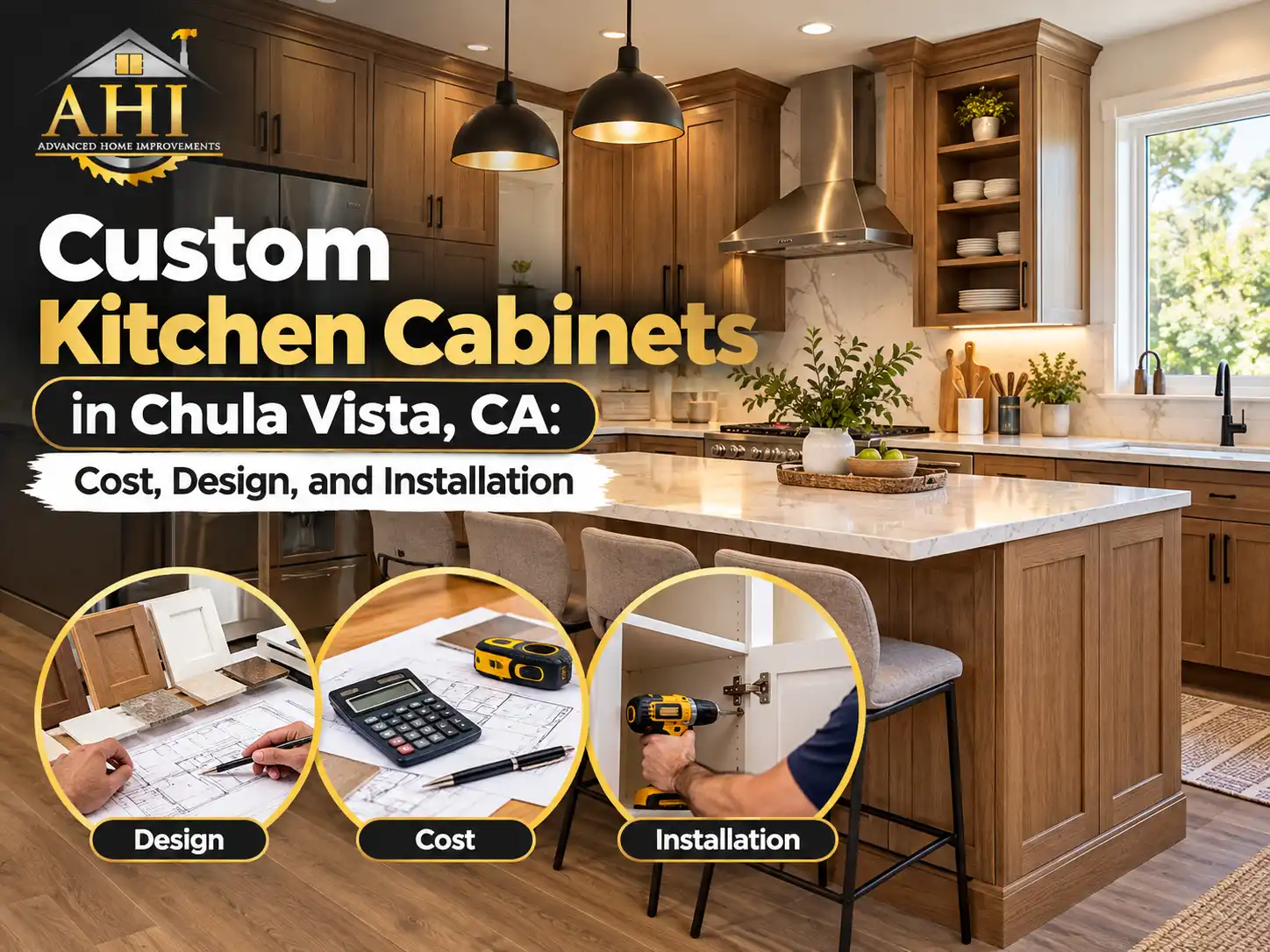
Custom kitchen cabinets can transform the way your kitchen looks, feels, and functions. They can let you select cabinet sizes, finishes, storage, and layouts that fit your home rather than standard sizes. When homeowners are considering a kitchen remodel in Chula Vista, CA, the ideal design can help maximize their available area.
But the price of cabinets is not only determined by the number of doors and drawers. All materials, construction methods, hardware, installation, and alterations to the existing layout can impact the final price. This guide explains local cost estimates, popular design ideas, and what to consider before ordering custom kitchen cabinets in Chula Vista, CA.
How Much Do Custom Kitchen Cabinets Cost in Chula Vista?
For budgeting, 2026 estimates for the San Diego area show a broad custom cabinetry range of approximately $277 to $1665 per linear foot, with one estimator placing the midpoint near $721 per linear foot. These figures are planning benchmarks, not guaranteed quotes. The final price depends on the cabinet type, materials, installation scope, and project complexity.
A separate regional estimate places kitchen cabinet installation at approximately $4,575 to $17,125, or $150 to $600 per linear foot. That estimate covers a different scope, so it should not be treated as a price for fully custom cabinetry alone.
What changes the total price?
| Cost factor | How it affects the budget |
| Cabinet materials | Solid wood and premium finishes may cost more than simpler alternatives |
| Kitchen dimensions | More cabinetry generally requires more materials and labor |
| Door style | Detailed profiles and inset doors can increase manufacturing costs |
| Storage features | Pull-out trays, dividers, and specialty organizers add to the price |
| Installation work | Uneven walls, removal, and layout changes can increase labor costs |
Request a written quote detailing cabinet fabrication, delivery, installation, hardware, removal, and any other remodeling services. A detailed breakdown helps you evaluate each bid on equal terms.
Choose Cabinet Materials That Fit Your Needs
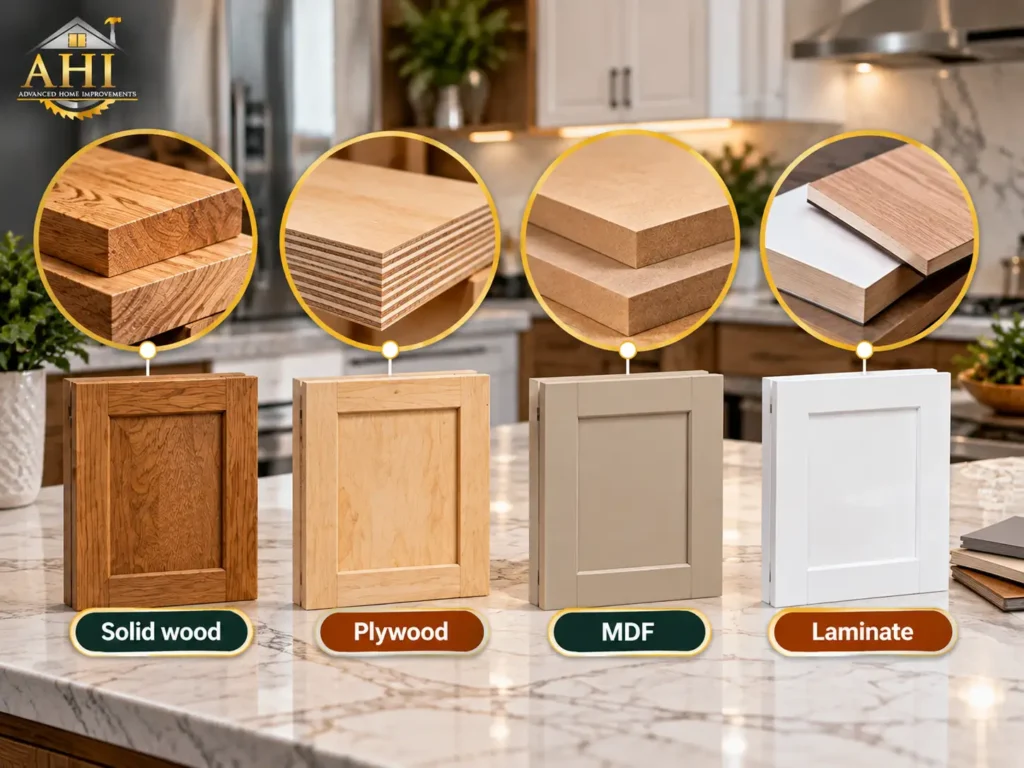
During kitchen remodeling, your choice of cabinet material shapes how the cabinets look, perform, age, and fit your budget. The material should suit how you use the kitchen and the overall atmosphere you want to create.
- Solid wood: Brings authentic character to cabinetry and may be restored over time when the wood type and coating allow. It often costs more than engineered alternatives.
- Plywood: Commonly used for cabinet boxes because of its layered construction. Quality varies by grade and thickness.
- MDF: Provides a smooth surface for painted cabinet doors and detailed profiles. It needs appropriate protection from moisture.
- Laminate: Offers a range of colors and patterns with relatively simple cleaning requirements.
Do not judge cabinet quality by the door material alone. Ask about the box construction, drawer joints, shelf thickness, hinges, and finish. These details influence how cabinets perform through years of daily use.
Kitchen Cabinet Design Ideas for Chula Vista Homes
The style of your cabinet should match the decor of your room, as well as make it functional for storage. It is good to have a clean, attractive finish, but the layout is just as important.
Shaker cabinets for a timeless look
Shaker style cabinets feature recessed center panels and simple frames. These are good for traditional, transitional, and modern kitchens. Bright, warm beige and natural wood finishes will help to balance this out.
Flat-panel cabinets for modern spaces
The surface and details of flat-panel doors are smooth. Pair them with understated hardware, contrasting finishes, or wood textures for a contemporary kitchen.
Open shelving for selected items
Open shelving can help make an enclosed kitchen feel more open and allow dishes to be easily accessed. May use them selectively, as items will accumulate dust and need to be organized periodically.
Two-tone cabinetry for visual contrast
Different colors or finishes can make the island stand out from the rest of the cabinets. For example, light perimeter cabinets paired with a darker island create contrast without requiring elaborate door designs.
Plan Storage Around Your Daily Routine
The first step to good cabinet design is to know what is being stored. When deciding on finishes, think about how you cook, what appliances you use the most, and where clutter can build up.
Useful custom storage features include:
- Deep drawers for pots, pans, and cooking utensils.
- Pull-out shelves that make items stored deep inside cabinets easier to reach.
- Vertical dividers for baking trays and cutting boards.
- Built-in pantry cabinets for dry goods and small appliances.
- Soft-close hardware that keeps cabinet doors and drawers from slamming.
Carefully measure appliances; consider door swings, walkways, and counter space. If you are planning kitchen island installation, consider how the island affects movement between the sink, refrigerator, and cooking area before finalizing the cabinet layout. For broader layout and renovation planning, explore this kitchen remodeling guide for Chula Vista homeowners.
What Happens During Custom Cabinet Installation?
Typically, custom cabinetry requires a number of steps. It is important to clarify the details prior to fabrication to minimize costly changes later.
- Measurement and consultation: Record room dimensions, existing utilities, appliance sizes, and storage requirements.
- Design and material selection: Approve cabinet dimensions, door styles, finishes, hardware, and internal organizers.
- Fabrication and preparation: Cabinets are built to the agreed specifications while the kitchen is prepared for installation.
- Removal and installation: Existing cabinets are removed if necessary, and new units are positioned, secured, leveled, and adjusted.
- Final inspection: Check door alignment, drawer operation, finish quality, and any remaining installation items.
AHI Restoration can help homeowners with cabinet upgrades around their kitchen’s layout, storage requirements, and renovation goals. If the project also involves moving plumbing, changing electrical work, or altering walls, discuss these changes before cabinet fabrication begins. They can affect the schedule, cost, and approvals needed.
How to Manage Your Cabinet Budget
It’s not necessary to opt for the most expensive materials to create a functional and attractive kitchen. Focus spending on the features you use every day.
Consider these practical ways to control costs:
- Keep the existing kitchen layout when it meets your needs.
- Choose a straightforward door style rather than intricate custom detailing.
- Add specialized organizers to the cabinets where they provide the most value.
- Compare material specifications instead of judging quotes by the total price alone.
- Include removal, installation, delivery, and finishing in the written estimate.
Double-check the project timeline, payment schedule, warranty, and process for change. You can also contact AHI Restoration to discuss your cabinet project and ask about a written estimate before committing to the installation.
Permits and Planning in Chula Vista
Cabinet replacement alone may involve different requirements from a broader kitchen remodel. The City of Chula Vista advises property owners to check whether their specific construction project requires a permit before work begins. Changes to plumbing, electrical systems, walls, or the structure can introduce additional requirements.
Contact the city’s Development Services Department to confirm the rules for your planned work. Permit fees depend on factors such as project value, complexity, required reviews, and inspections, so there is no single fee that applies to every kitchen upgrade.
Frequently Asked Questions
Are custom cabinets worth the investment?
Custom cabinets make sense when standard sizes don’t fit your space, or you are after specialized storage. The value depends on your budget, construction quality, and how long you plan to use the kitchen.
How long does custom cabinet installation take?
The timeline changes based on design approvals, how fast materials arrive, demolition, and installation details. Ask your contractor for separate estimates covering fabrication and actual installation.
Is it possible to install new cabinets without renovating the whole kitchen?
Yes. If your layout, plumbing, and electrical systems are in good condition, you may replace cabinets without a full remodel. The practicality really depends on the condition of your current kitchen.
Which cabinet material is best?
There’s no single answer. Solid wood, plywood, MDF, and laminate all have their own benefits, prices, and upkeep. Pick what matches your needs, finish preference, and quality expectations.
Final Thoughts: Design a Kitchen Around Your Lifestyle
Custom cabinets give you better storage, revitalize your home, and make daily cooking easier. If you set a clear budget, choose the right materials, plan your layout carefully, and finalize your installation details, your project will run more smoothly and match what you want.
AHI Restoration can help you plan your kitchen upgrade with attention to cabinet design, practical storage, and the work needed to bring your vision together. Compare written estimates and confirm the project scope before committing to the installation.