If you are planning an addition, the first question is usually simple: How much will it cost? In Chula Vista, the answer depends on the size of the project, foundation, finishes, plumbing, structural work, and permit requirements. AHI Restoration can help homeowners evaluate the scope of an addition and plan around the property’s needs. Current San Diego-area construction sources put many residential additions in the broad range of about $200 to $500+ per square foot, with more complex projects costing more.
This guide explains the home addition cost in Chula Vista, what can push your budget higher, how permit fees work, and how an addition compares with an ADU. The figures below are useful for early budget planning, but a property-specific estimate is needed before making a construction decision.
How Much Does a Home Addition Cost in Chula Vista?
A reasonable early planning range for home additions and ADUs in Chula Vista is roughly $200 to $450 per square foot, while projects with bathrooms, kitchens, difficult foundations, second-story construction, or premium finishes can move above that range. This reflects current pricing reported across the wider San Diego market rather than a fixed Chula Vista rate.
For example, a 300-square-foot addition could have a preliminary construction budget of approximately $60,000 to $135,000. A 500-square-foot project could fall around $100,000 to $225,000 before unusual site conditions or high-end selections are added.
| Addition Size | Early Planning Range |
| 200 sq. ft. | $40,000–$90,000 |
| 300 sq. ft. | $60,000–$135,000 |
| 400 sq. ft. | $80,000–$180,000 |
| 500 sq. ft. | $100,000–$225,000 |
| 800 sq. ft. | $160,000–$360,000 |
These are planning ranges based on current San Diego-area construction pricing, not quotes from the City of Chula Vista or guaranteed project prices. Actual costs can vary substantially.
The final room addition price depends less on square footage alone than many homeowners expect. A simple bedroom is very different from a primary suite with a bathroom, custom windows, upgraded electrical work, and extensive roof changes.
What Drives Home Addition Cost in Chula Vista?
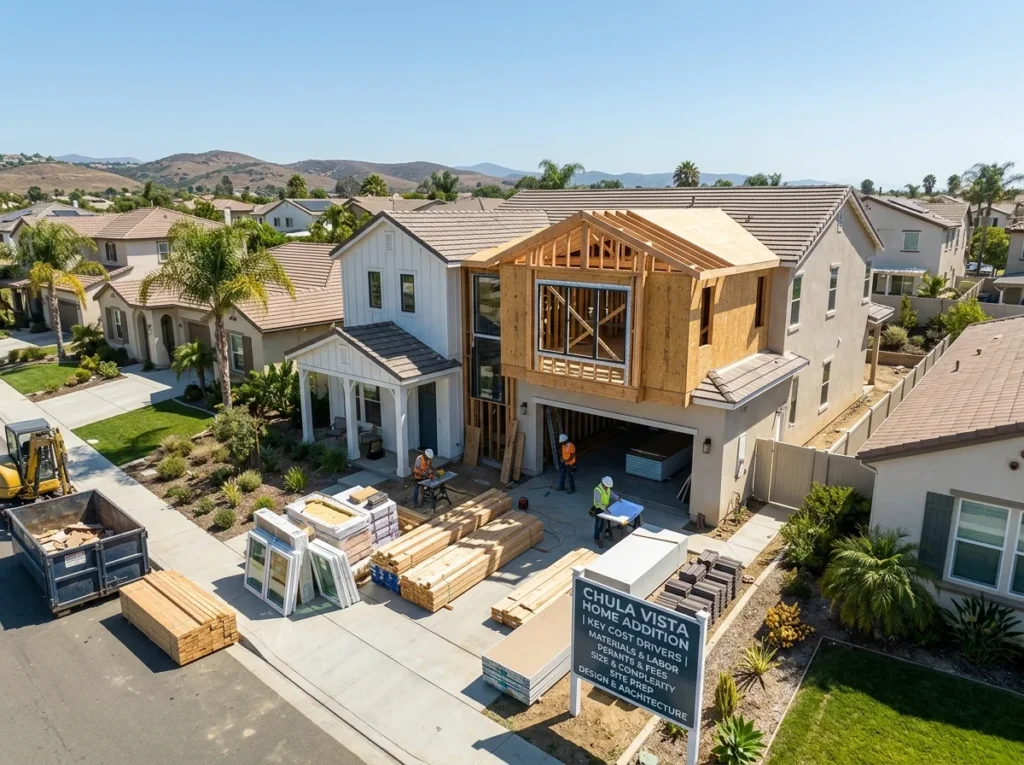
Several parts of the project can change the final budget. Understanding them before design begins can make contractor proposals easier to compare. If an addition is part of a larger renovation, whole-home remodeling services may involve additional design, structural, and finish considerations.
Foundation type and site conditions
The foundation is one of the first cost areas to investigate. A straightforward slab-on-grade addition may be simpler than an addition requiring more extensive excavation, reinforced footings, or structural engineering.
The condition and slope of the property also matter. A relatively flat lot may require less site preparation than a property with grade changes. Soil conditions can also affect engineering and foundation design.
Labor and material costs
Labor costs and material costs make up a large portion of any additional budget. Framing, roofing, electrical, plumbing, HVAC, drywall, flooring, windows, and exterior finishes all add to the total.
Matching an existing house can also require more work than installing standard materials. For example, a homeowner may need windows, roofing materials, stucco, siding, or flooring that closely matches the existing structure.
Kitchens and bathrooms
Adding plumbing can quickly change the budget. A bedroom or family room without plumbing is generally simpler than a new bathroom or kitchen.
That is why two 400-square-foot additions can have very different prices. One might be an open living area, while the other includes a bedroom, bathroom, kitchenette, new plumbing lines, and additional electrical circuits.
Second-story construction
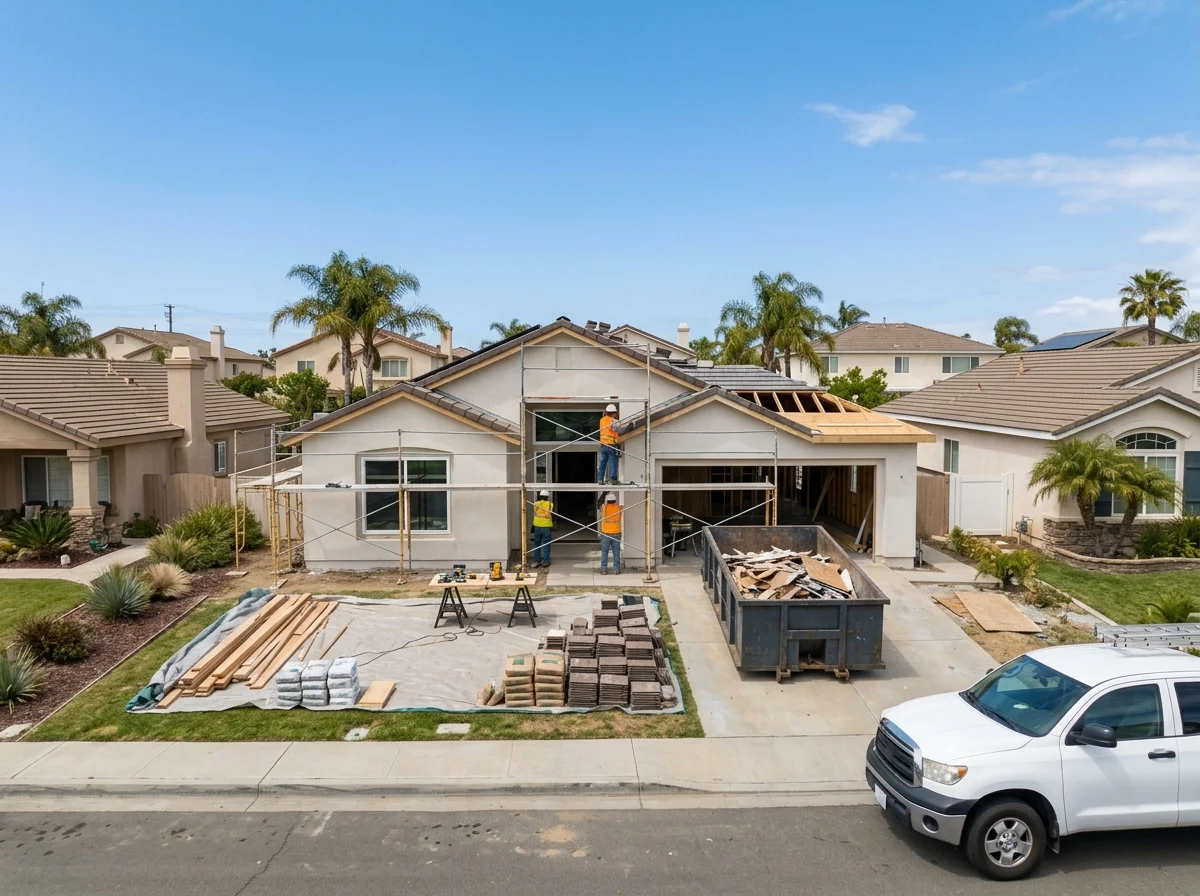
Building upward can save yard space, but it usually requires more structural planning. Existing walls, foundations, and framing need to support the additional load. Structural engineering and temporary protection can also add complexity.
For homeowners considering a second floor, the cost should be evaluated separately rather than applying a basic ground-floor cost per square foot to the entire project.
What Permit Fees Should Chula Vista Homeowners Expect?
Chula Vista requires building permits for construction that physically changes or adds structures to a property. Planning review also checks issues such as setbacks, height, lot coverage, and zoning requirements.
The City does not publish one flat price for every addition. Permit costs depend on factors such as project size, construction value, complexity, additional permits, plan review, and inspections. The City also notes that final fees can include building and site inspection costs.
For projects that add habitable square footage, school district requirements may also apply. Other approvals can be needed depending on the property and scope of work.
Development Impact Fees are another consideration. Chula Vista calculates these based on the impact of new development, and rates can change over time. For additions to existing properties, the City states that fees can apply to the net increase in impact rather than automatically treating the entire existing property as new construction.
For this reason, permit fees should be treated as a separate budget item until the project has been reviewed.
Is an ADU Cheaper Than a Home Addition?
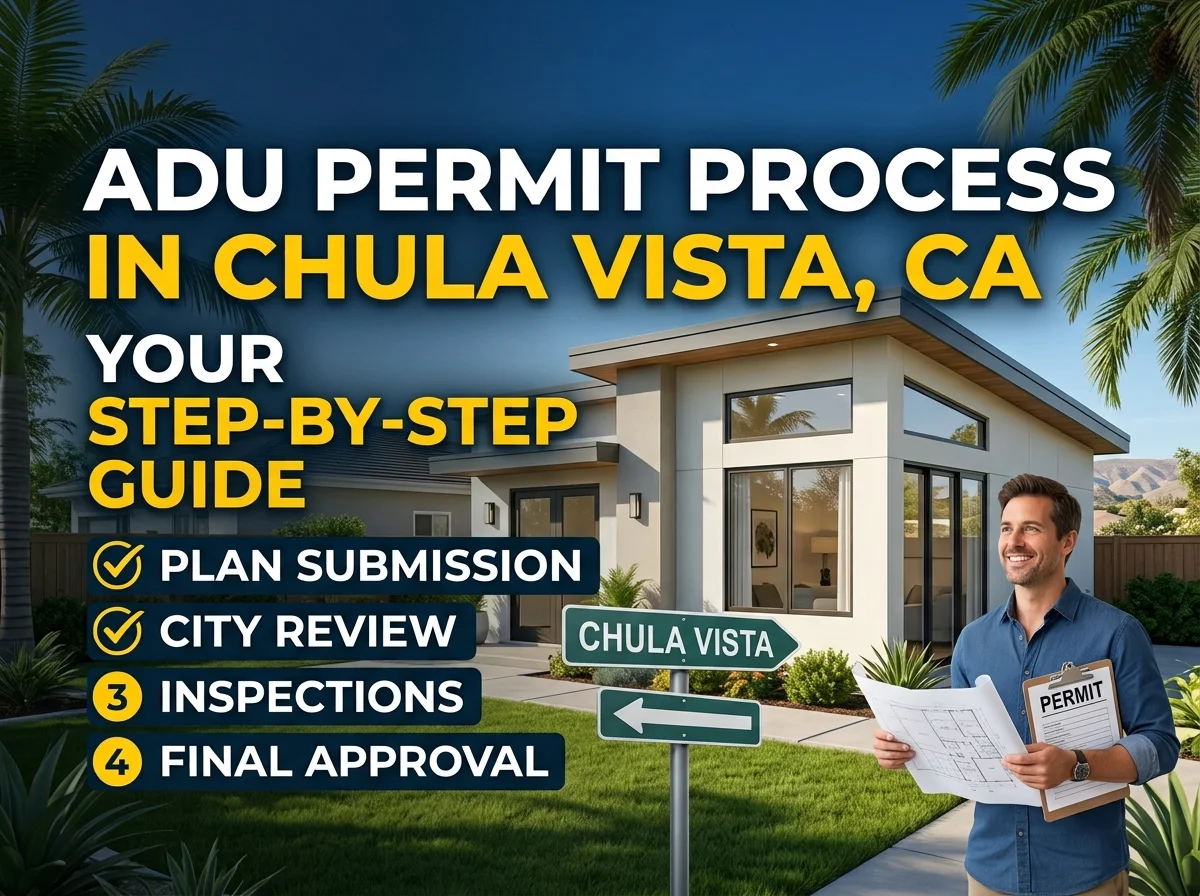
Not necessarily. An ADU is a separate living unit, so it usually needs its own kitchen, bathroom, living space, entrance, and related systems. That can make the project more expensive than adding a basic bedroom or family room to the existing house.
For homeowners researching an ADU cost estimate in Chula Vista, current San Diego-area sources commonly place new ADU construction in the broad range of about $200 to $400+ per square foot, depending on the design and site.
Chula Vista has some useful ADU-specific options. The City offers standard ADU plans, and qualifying City Standard ADU Plans can receive faster review and approximately $1,000 less in plan review fees compared with a full submittal. Site-specific work, engineering, utilities, inspections, and other fees can still apply.
The City also states that ADUs under 750 square feet are exempt from development impact and in-lieu fees, while ADUs of 750 square feet or more are charged development impact fees proportionately to the primary residence.
So an ADU can make sense when you need an independent living space, but it should not automatically be viewed as the cheaper way to add square footage.
What About ADU Financing Programs?
Financing is worth researching early because an ADU can require a substantial upfront investment. California’s Department of Housing and Community Development lists several potential funding resources. Cal HFA’s ADU Grant Program can provide up to $40,000 for eligible predevelopment costs, while the San Diego Housing Commission’s ADU Finance Program offers construction loans of up to $200,000 for qualifying homeowners.
Eligibility, funding availability, and program requirements can change. Homeowners should confirm current terms before including assistance in their project budget.
How Can You Plan a More Accurate Addition Budget?
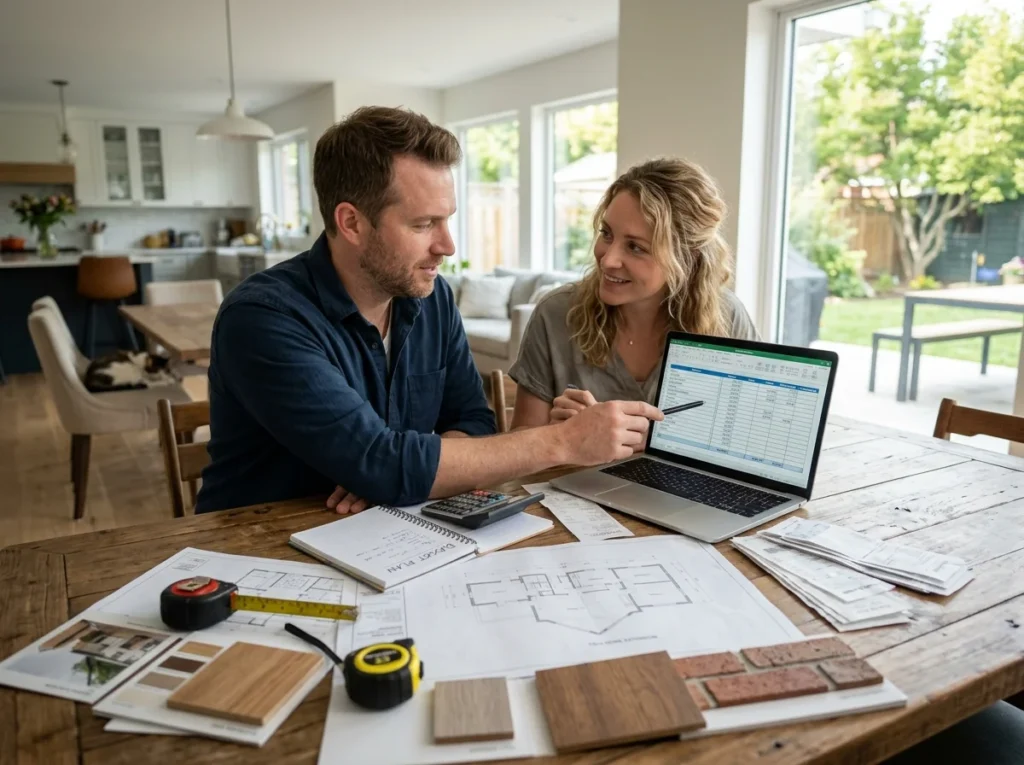
Start with the size and purpose of the addition. Then identify whether you need plumbing, HVAC changes, new electrical service, foundation work, or major structural modifications.
Next, separate the budget into construction, design and engineering, permits, utility work, and finish selections. Keep some room for unexpected conditions rather than spending the entire budget on finishes.
It is also useful to compare detailed proposals from experienced general contractors. Make sure each proposal describes the same scope. One contractor may include design, engineering, permits, and finish materials while another may price construction only. Comparing totals without comparing scope can create a misleading picture.
For homeowners researching home extension pricing in San Diego County, local conditions matter. Chula Vista’s permitting requirements, existing home construction, lot conditions, and selected finishes can all affect the final number.
Home Addition vs. Moving: Which Makes More Sense?
An addition can make sense when you already like your location and need more usable space. It can be particularly practical when the existing lot has room and the home’s layout can be expanded without major structural complications. Before making a decision, reviewing different home addition options in Chula Vista can help you compare ways to expand your property.
Moving may make more sense if the existing property cannot accommodate the size or type of space you need. The right choice depends on the property, financing, project scope, and long-term plans.
Before deciding, get a realistic construction budget and compare it with the cost of purchasing a different home. That gives you a better basis for deciding whether expanding is worthwhile.
Final Thoughts on Home Addition Costs in Chula Vista
The home addition cost in Chula Vista can vary widely, but a preliminary range of about $200 to $450 per square foot is a useful starting point for many standard projects, with complex or premium additions potentially going higher. Current San Diego-area pricing supports this broad planning range, but no online estimate can replace a property-specific evaluation.
Foundation requirements, labor, materials, plumbing, structural changes, permits, and finish choices can all move the budget. If an ADU is being considered, Chula Vista’s specific rules and available financing programs should be reviewed before design begins.
The best budget is one based on the actual house, lot, scope, and permit requirements—not simply a square-foot number. If you are ready to discuss your project and get a better understanding of the work involved, contact AHI Restoration to discuss your home addition plans.
FAQs
What is the average addition cost range in Chula Vista?
For early planning, many standard additions can be budgeted around $200–$450 per square foot, while complex projects may exceed that range. Actual pricing depends on scope and property conditions.
Does a home addition require a permit in Chula Vista?
Yes. Chula Vista requires building permits for work that adds or physically changes structures, with planning review also applying to zoning and development standards.
Are permit fees included in construction costs?
Not always. Permit, plan review, inspection, impact, school, and other applicable fees may be separate from a contractor’s construction price.
Is an ADU cheaper than a room addition?
Not automatically. An ADU has independent living requirements, including kitchen and bathroom facilities, so its total cost depends heavily on the design and site.
What should I include in my addition budget?
Include construction, design, engineering, permit fees, foundation work, utilities, finishes, and a reasonable allowance for unexpected site conditions.