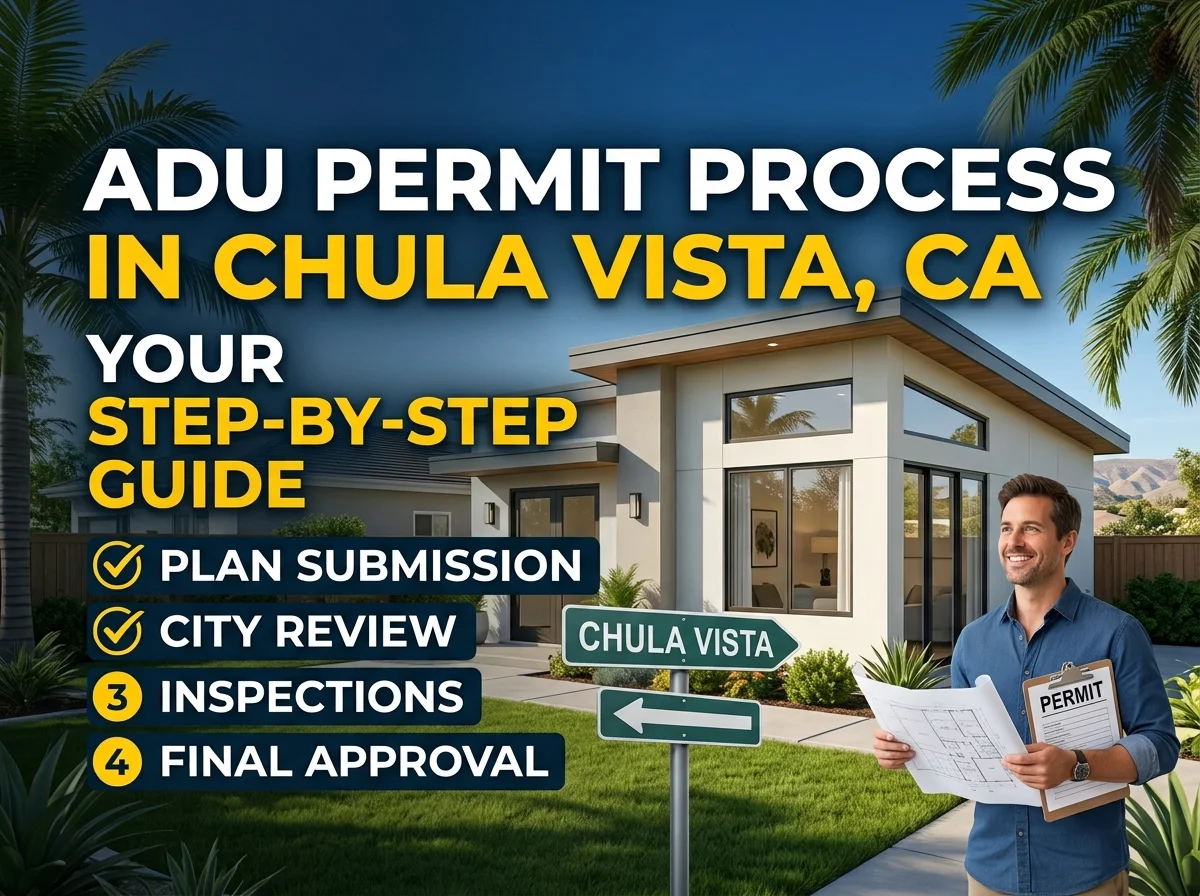
If you are planning an ADU in Chula Vista, the permit process starts with checking the property, zoning rules, and project requirements before submitting plans. The City of Chula Vista allows ADUs in areas zoned for single-family or multifamily residential use, subject to applicable state and local standards. The City also provides an ADU checklist, standard plans, and electronic permit services.
The ADU permit process in Chula Vista generally moves through property and zoning review, plan preparation, permit application, plan check, corrections if needed, permit issuance, construction inspections, and final approval. California law also sets rules for ministerial ADU review and approval timelines, but the actual project schedule depends on the completeness of the application and the work required for the property.
What Should You Check Before Applying for an ADU Permit?
Start by confirming that your property can support the proposed ADU. The City of Chula Vista states that ADUs are permitted in areas zoned to allow single-family or multifamily residential use. Planning review also considers development standards such as setbacks, height, and lot coverage.
This step matters in established communities such as Eastlake and Otay Ranch, where the property layout, existing structures, utilities, and applicable zoning requirements can affect the design. If the property is part of an HOA, review the governing documents as a separate issue. City approval and private HOA matters are not the same thing.
For properties outside the City of Chula Vista, the process may be different. Searching for how to get an ADU permit San Diego County can be misleading if the property is actually inside a city. The correct permitting agency depends on the property’s jurisdiction.
What Are the Chula Vista ADU Setback and Size Rules?
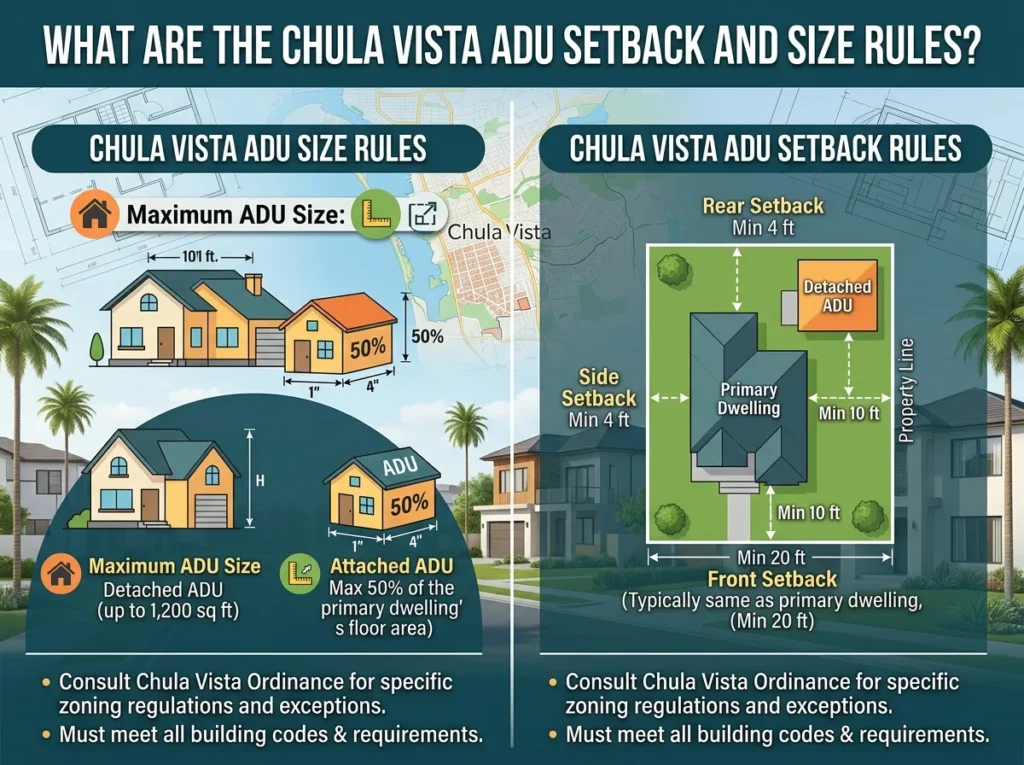
Chula Vista’s current ADU information lists different standards depending on the type of property and ADU. For a single-family property, the City lists a maximum size of 1,200 square feet for a detached ADU. Attached or converted ADUs have different size rules. The City also lists four-foot side and rear setbacks for the applicable ADU standards.
Height rules can also vary. For example, the City’s current guidance lists different maximum heights for detached ADUs based partly on proximity to transit and whether the design uses additional height to match the primary home’s roof pitch. These standards should be checked against the current project conditions before plans are finalized.
Do not assume that a basic backyard layout will automatically meet every requirement. Existing buildings, property lines, utility locations, easements, and site conditions can affect the final plan.
Step 1: Prepare the ADU Plans and Documents
The next stage is preparing the permit package. Depending on the project, this can include a site plan, architectural plans, structural information, energy documentation, utility information, and other site-specific materials.
The City of Chula Vista provides standard ADU plans that homeowners can use through the City’s program. Even these standard plans require additional site-specific information. The City specifically lists items such as a site plan, geotechnical report or waiver, energy design, utility connections, and engineering when applicable.
This is one reason a complete permit application matters. Missing information can prevent acceptance or extend the review process.
Step 2: Submit the ADU Permit Application
Chula Vista uses its electronic permitting platform, Citizen Access, for online permit services. The City accepts plans electronically and provides online services for building and planning permit submissions, permit research, fee payment, and inspection scheduling.
The application should contain the documents required for the specific ADU. Depending on the project, additional approvals or agency coordination may also be required. The City notes that new buildings require verification of water and sewer service, and other outside-agency requirements may apply.
Submitting an incomplete package can create avoidable delays, so it is better to resolve documentation issues before the plan check submission.
Step 3: Go Through Plan Check and Corrections
After submission, the City reviews the plans for compliance with applicable requirements. Chula Vista’s published plan-check goals list 20 business days for the first review of a residential ADU, with a general goal of 10 business days for a recheck. These are general timeframes, not guaranteed approval dates. Complete applications may be reviewed more efficiently, while missing information can extend the process.
California also has statewide ADU review requirements. The California Department of Housing and Community Development states that an ADU application is generally subject to ministerial review and that agencies must make a completeness determination within 15 business days. California law also establishes a 60-day period for action on a completed ADU application in applicable circumstances.
These rules should not be confused with a promise that every project will receive a permit within a specific number of days.
Step 4: Complete Required Fees and Approvals
Once the plans have cleared the required review, the project moves toward permit issuance. Chula Vista requires applicable permit and impact fees to be paid and requires approved plans and permits from applicable City departments. The City also identifies water and sewer verification and coordination with outside agencies when required.
Utility connections deserve attention during planning. Chula Vista lists separate utility permits for work involving electrical, plumbing, sewer, gas, and related systems. Certain electrical service changes may also require an SDG&E work order before the permit can be issued.
Step 5: Receive the Permit and Begin Construction
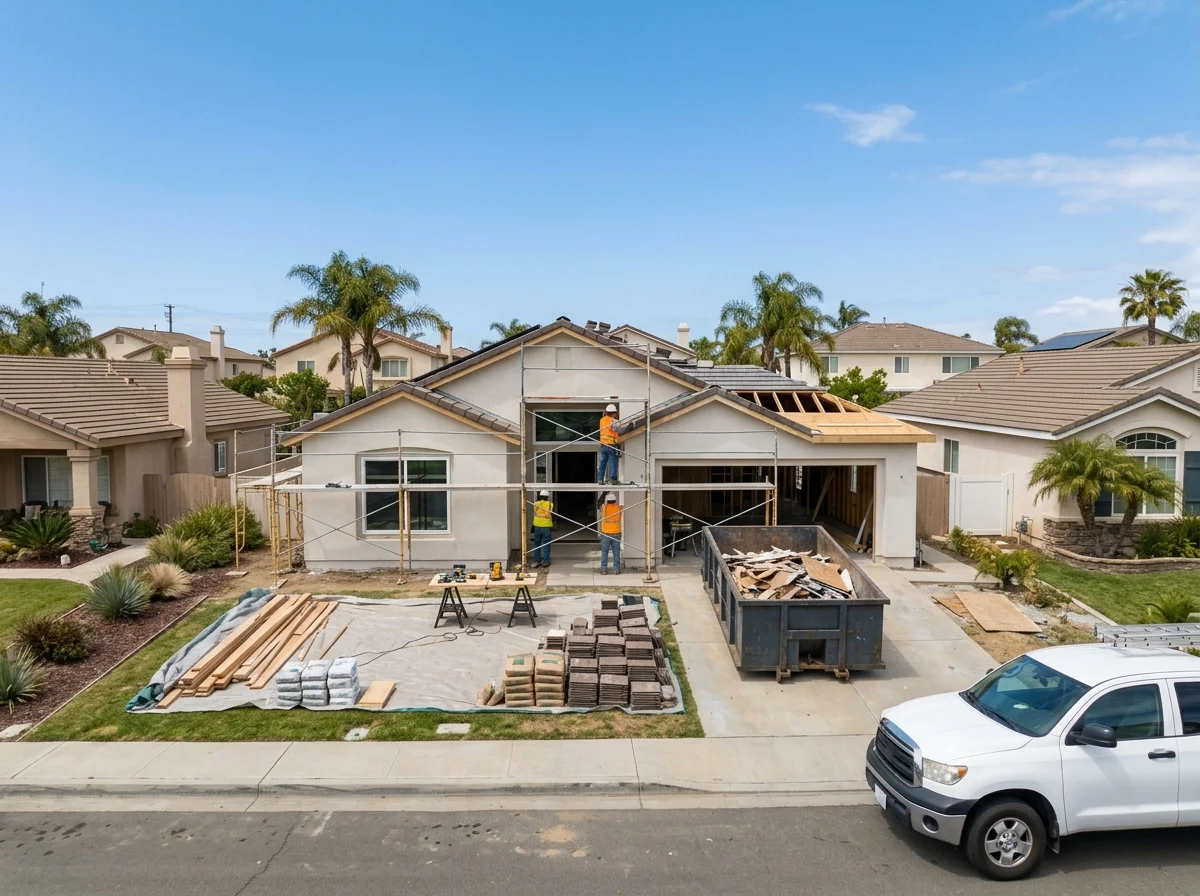
Construction can begin after the required permit has been issued. The approved plans become the basis for the work and later inspections.
A contractor may obtain a building permit on behalf of a property owner. Chula Vista states that contractors performing work in the city must have a valid City business license. Property owners may also qualify for an owner-builder permit under the City’s stated conditions.
Using the approved plans during construction helps keep the project aligned with what was reviewed by the City.
Step 6: Schedule ADU Inspections
Inspections are required during construction. Chula Vista allows inspection scheduling through Citizen Access and its automated inspection phone system. The City explains that inspections verify construction and installation work against approved plans and applicable codes and standards.
Inspection timing can vary. The City says inspection requests may be moved to the next available business day when daily limits are reached, and it currently notes high inspection volumes and a transition to new permitting software.
Plan the construction schedule around required inspections rather than waiting until the last moment to request them.
How Long Does an ADU Permit Take in Chula Vista?
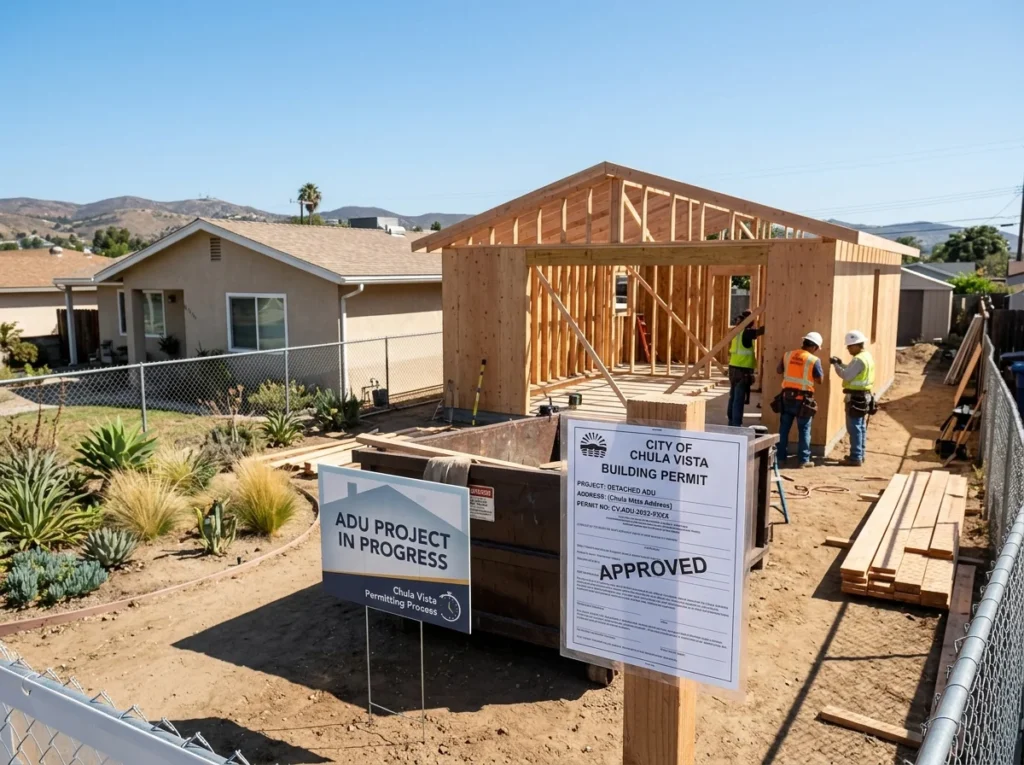
The ADU approval timeline California rules and the City’s plan-check goals provide useful benchmarks, but they are not the same as a guaranteed project completion date.
For Chula Vista, the City lists 20 business days as its general first-review goal for residential ADUs and 10 business days for a recheck. California law separately establishes requirements for completeness review and action on completed ADU applications.
The overall project can take longer because design preparation, corrections, utility work, fees, inspections, construction, and final approvals occur outside a simple first plan review.
What About HOA Restrictions?
An HOA can raise separate questions from the City’s permitting process. California law limits certain restrictions involving ADUs and JADUs in common-interest developments, but homeowners should still review their governing documents and the current state requirements for their situation.
Do not assume an HOA rule automatically replaces City zoning or building requirements. Conversely, City approval does not automatically resolve every private association issue.
Final Step: Complete Inspections and Occupancy Approval
The final stage is completing all required inspections and obtaining the approvals needed for occupancy. California’s current ADU guidance states that a property owner must obtain a Certificate of Occupancy from the local agency before residential occupancy of an ADU or JADU.
For a Chula Vista project, keep the approved plans, permit records, inspection results, and final approvals together. These records can be useful for future property questions, refinancing, remodeling, or resale.
Final Takeaway
The ADU permit process in Chula Vista is easier to manage when the project starts with the correct zoning information, complete plans, site-specific documents, and a clear understanding of City and California requirements. Chula Vista provides an electronic permitting system and specific ADU resources, while California law establishes statewide rules for ADU review.
Using the approved plans during construction helps keep the project aligned with what was reviewed by the City. AHI Restoration can help homeowners coordinate the construction side of an addition or ADU project based on the approved scope.
A complete application can reduce avoidable plan-check corrections and help keep the project moving. If you are planning an ADU or addition, contact AHI Restoration to discuss your project and the construction work involved.
Frequently Asked Questions
Do I need a permit for an ADU in Chula Vista?
Yes. An ADU is a residential structure that must meet applicable building and planning requirements. Chula Vista provides a specific ADU permit process and checklist.
How long does Chula Vista take to review an ADU?
The City’s published general plan-check goal is 20 business days for the first review of a residential ADU and 10 business days for a recheck. These are general review goals, not guaranteed approval dates.
Can I use a standard ADU plan in Chula Vista?
Yes. The City offers City Standard ADU Plans. However, standard plans still require site-specific information such as site planning, energy documentation, utility information, and other applicable engineering or reports.
Does an ADU need utility connections?
Utility requirements depend on the project. Chula Vista identifies water, sewer, electrical, plumbing, gas, and other utility-related requirements that may apply to residential construction.
Is Chula Vista part of San Diego County for ADU permits?
Chula Vista is in San Diego County, but a property inside the City of Chula Vista generally follows the City’s permitting process rather than an unincorporated County process. Always confirm the property’s actual jurisdiction before submitting an application.
Do ADUs require inspections?
Yes. Permitted construction is subject to inspections. Chula Vista provides online and telephone systems for scheduling and checking inspection results.